A Complete Comparison for Entrepreneurs and Business Leaders


Entrepreneurs' Organization (EO) and Young Presidents' Organization (YPO) are two of the most respected peer networks for business leaders in the world. Both are global, not-for-profit membership communities built around the same core idea: that leaders grow fastest when they learn from peers who have walked the same path. Both build their member experience around small, confidential peer groups called Forums. If you're evaluating EO vs. YPO, this guide clarifies similarities, differences, and how EO membership requirements compare with YPO membership requirements.
That said, the organizations differ in who they are designed to serve: EO is built exclusively for founders and business owners to share insights, experiences, and vulnerability. YPO is built for top executives of organizations that meet significant scale thresholds. The revenue bar to join EO is lower, but EO's identity requirement is stricter: you must be an owner or founder, not just a senior executive.
This guide compares each organization across a range of categories: membership criteria, costs, Forum experience, programming, global reach, and culture.

To qualify for EO, applicants must meet all of the following, per EO's eligibility page:
YPO's criteria are more stringent. Applicants must satisfy one criterion from each of four categories:
Overall, YPO membership requirements emphasize age, executive title, employee count, and higher revenue or value metrics.
A founder running a US$3 million services firm qualifies for EO but not YPO. A hired CEO running a US$20 million company qualifies for YPO but not EO. The organizations are not competing for the same applicant pool — they are serving different stages and identities.
Forum is the centerpiece of membership in both organizations. It is a small, confidential peer group that meets monthly, structured around experience-sharing rather than advice-giving. Members present real challenges; peers respond with relevant personal experiences rather than prescriptive recommendations. What is shared in Forum stays in Forum.
EO's peer group is called a Forum. Key characteristics:
EO's Forum is unique to the entrepreneur's experience. The shared context of building and owning a business — and balancing those considerable responsibilities with family and life outside of work — creates a particular kind of trust, respect, and authenticity that is difficult to replicate in a broader executive setting.
Vistage's peer group is called a peer advisory group. Key characteristics:
Many dual members describe the two Forum experiences as genuinely complementary: EO for the entrepreneur-specific peer group, YPO for the executive leadership network.


Both EO and YPO operate extensive global networks, giving members opportunities to connect with peers far beyond their local chapter.
EO includes more than 20,000 members across 220+ chapters in over 100 countries. Because membership is limited to entrepreneurs, members can generally expect a consistent peer experience whether they attend events locally or engage with members abroad. Global Communities, MyEO groups, regional events, and international learning experiences allow members to build relationships around shared interests, industries, and life stages.
YPO's network is larger, with more than 38,000 members across 150+ countries. Its membership includes entrepreneurs, family business leaders, and professional executives, creating a broader mix of leadership perspectives. Members can participate in a wide range of industry, functional, and interest-based networks that span regions and sectors.
For many prospective members, however, the local experience remains the most important consideration. The strength of a chapter, the quality of its Forum experience, and the relationships developed with peers often have a greater impact on long-term membership value than the size of the organization's global footprint.
While EO and YPO both connect leaders with high-caliber peers, the experience inside each organization is distinct.
EO is built exclusively for entrepreneurs. Every member has experienced the realities of ownership, including making payroll, managing cash flow, taking financial risk, and navigating the uncertainty that comes with building a business. Because members share those experiences, conversations often move beyond business strategy to include leadership, relationships, health, family, and personal growth. EO's strict non-solicitation culture and Forum methodology help create an environment centered on trust, confidentiality, and peer learning.
YPO brings together a broader mix of leaders, including founders, family business leaders, and professional executives. Discussions often focus on organizational leadership, governance, large-scale management challenges, and global business trends. The organization's larger size and longer history provide access to a wide range of executive perspectives and global networks.
Neither approach is inherently better. The right fit depends on what type of executive-level peers you want around the table and what challenges you are looking to solve.
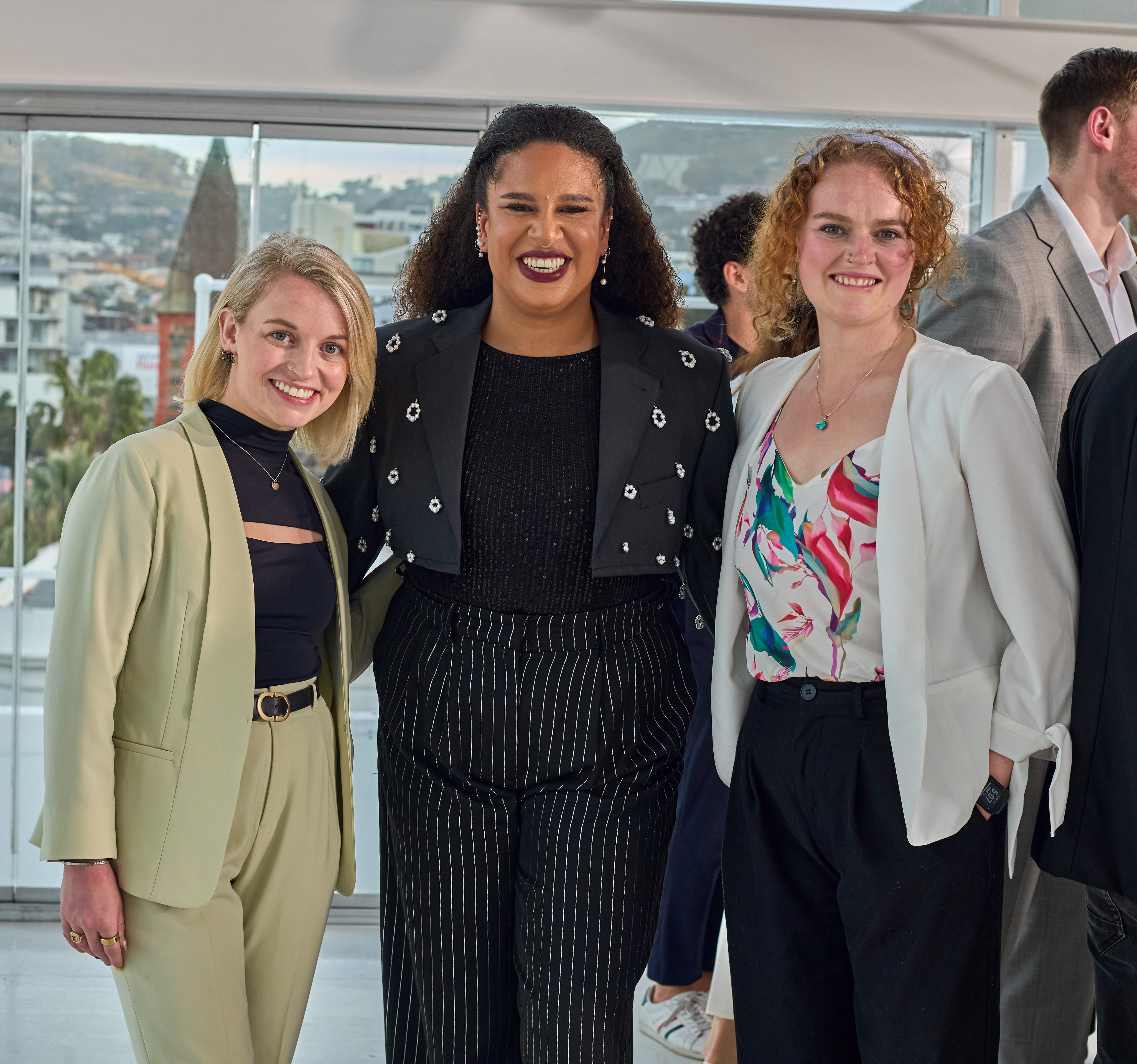
The bottom line: EO and YPO serve different leadership communities. If your goal is to connect with peers who understand the realities of entrepreneurship firsthand, EO offers one of the world's largest and most established networks built specifically for entrepreneurs.
Yes. There is no rule preventing simultaneous membership. Many entrepreneurs who have scaled to YPO-qualifying revenue maintain active EO membership as well. Dual members typically describe the two Forum experiences as complementary rather than redundant.
EO requires US$1 million USD in annual revenue. YPO requires US$15 million USD for most business types, with different thresholds for agencies (US$12M), financial institutions (US$300M AUM), and businesses qualifying by enterprise value (US$25M+).
EO requires applicants to be the owner or majority stakeholder of a business you founded or a family business. A hired executive, even a CEO, does not qualify unless they also hold an ownership stake. This is the most fundamental eligibility difference between the two organizations.
Members who reach age 50 transition to YPO Gold, a program for former YPO members that maintains access to networking, events, and educational programming.
EO centers on ownership identity; YPO centers on executive role and scale. EO requires you to be a founder, owner, co-founder, or majority stakeholder, with US$1M+ in annual revenue (or a venture-backed exception) and no age limit. YPO requires you to be under 45 at application, hold a top executive title (e.g., CEO/President/MD), meet employee thresholds, and clear higher revenue/value bars (e.g., US$15M+ revenue for most businesses). Example: a founder of a US$3M services firm qualifies for EO but not YPO; a hired CEO of a US$20M company qualifies for YPO but not EO.
Possibly. EO’s venture-backed exception allows entry if you’ve raised US$2M+ privately (or US$5M+ publicly) and have 10+ full-time employees. If you don’t meet that, EO Accelerator is designed for founders below the US$1M revenue mark to help you scale toward full EO membership.
Both use small, confidential, experience-sharing peer groups that meet monthly, but composition shapes the conversation. EO Forums (6–10 members) are owner-only, which heightens candor around personal financial risk, work–life balance, and the founder’s journey; annual retreats are common. YPO Forums (8–10 members) include founders, hired CEOs, and family-business leaders across industries, with a strong emphasis on executive leadership and scale; YPO invests heavily in certified moderator training. Many dual members find them complementary: EO for entrepreneur-specific depth, YPO for broader executive perspective.
EO’s initiation fee is about US$3,500; annual global dues are roughly US$2,630 plus local chapter dues (which vary by chapter). YPO’s costs are higher: a global initiation fee of about US$4,650 plus any chapter initiation fee, and annual global dues around US$4,650 plus chapter dues (also variable).
No. YPO requires applicants to be under 45 at the time of application. Existing YPO members transition to YPO Gold at age 50, but YPO Gold is not a path for new entrants; it’s a continuation program for members who joined before 45.
Yes, as long as you qualify for EO membership, you may join regardless of age.
Choose based on the peer experience you want most—and consider joining both if you see distinct value. EO is owner-only and optimized for entrepreneur-specific depth, candid discussions that blend business and life, and a Forum built around shared ownership realities. YPO brings a broader executive mix (founders plus hired CEOs and family-business leaders) and focuses on organizational leadership and scale. Many who qualify for both maintain dual memberships because the Forums and networks are complementary rather than redundant.
For EO, no—there’s a one-member-per-company rule. EO allows only one member per qualifying business. The guide does not indicate a similar restriction for YPO; its criteria are individual-based (age, title, employee and revenue/value thresholds). If co-founders are evaluating YPO, confirm any chapter-specific nuances directly with YPO.
EO’s programming centers on “whole-person entrepreneurship,” with chapter/regional/global learning, university partnerships (e.g., Harvard, Wharton, London Business School), Global Leadership Conference, and both Communities and MyEO interest groups. It also offers EO Accelerator for founders below US$1M revenue. YPO focuses on executive leadership and organizational scale, hosts the YPO Edge flagship event, and provides hundreds of formal global Networks spanning industries, functions, and interests. The mix of members in YPO also amplifies access to diverse executive perspectives.
Both organizations have extensive global footprints (EO: 220+ chapters in 100+ countries; YPO: 450+ chapters in 150+ countries), enabling rich cross-border connections. However, the local chapter and Forum quality often drive the most day-to-day value. Most members find that chapter strength, Forum fit, and peer relationships outweigh raw global scale—though global networks and events add meaningful opportunities as you engage more broadly.
A Forum is a small, confidential executive peer group that meets monthly. It is structured around experience-sharing rather than advice-giving. Both EO and YPO consider the Forum the core of membership, and long-term members consistently cite it as the single most valuable benefit of belonging to either organization.