Leadership Skills for Entrepreneurs: How to Become a Stronger Leader as an Entrepreneur 

Most entrepreneurs are exceptional at starting things. They spot opportunities, move fast, and outwork everyone around them. Somewhere, though, between the early hustle and the moment the business starts to scale, a gap reveals itself: The skills that built the company stop being enough to lead it. Developing entrepreneurial leadership becomes essential here.

That gap is a leadership gap, and it is one of the most common inflection points founders face. The good news: leadership is not a fixed trait. It is a learnable, practicable discipline, and the entrepreneurs who commit to it consistently outpace those who do not.

This guide covers the specific leadership challenges founders encounter at each stage of growth, the practical skills that close those gaps, and how communities like Entrepreneurs' Organization (EO) accelerate leadership development for founders.

In this guide

  • Why Entrepreneurial Leadership Is Different
  • The Leadership Stages of the Entrepreneurial Journey
  • Core Skills That Make Founders Stronger Leaders
  • How to Build a Leadership Practice
  • How EO Helps You Grow as a Leader
  • Frequently Asked Questions
  • Related Reading
  • Next Steps: How to Join EO

Leadership looks different depending on where you sit.

For a corporate manager, it often means executing someone else's vision within defined structures. For an entrepreneur, it means something far more demanding: you are the vision, the culture, the decision-making framework, and often the last line of accountability when things go wrong. This is the heart of entrepreneurial leadership.

This creates a unique set of pressures. Founders tend to be highly confident, which is an asset in the early stages and a liability when the business needs them to delegate, listen, and develop others. As Mandy Gilbert (EO Toronto), put it after a pivotal leadership assessment: "I was a leader, but not a great one."

That kind of honest self-reckoning is harder for entrepreneurs than for most, because so much of the founder's identity is tied to being the one who figures

The entrepreneurial leadership challenge is not just about managing people. It is about evolving your identity as the company grows.

Three dynamics make this particularly acute for founders:

  • The isolation factor. Most founders have no true peers inside their own company. The loneliness of the top seat makes honest feedback rare and self-awareness harder to develop.
  • The identity trap. When you built it, you own it, and letting go of control feels like losing something essential rather than gaining leverage.
  • The pace problem. Running a business leaves almost no time for deliberate leadership development. Most founders learn by crisis rather than by design.

EO Forums are facilitated by trained peer moderators, not consultants or gurus. Members maintain ownership of their decisions—the group adds perspective by sharing what they did, how they felt, and what they learned in similar situations.

The Leadership Stages of the Entrepreneurial Journey

Entrepreneurial leadership evolves through distinct stages, each with its own demands and blind spots. Understanding where you are makes it easier to know what to work on next. 

Stage 1: The Founder-Operator (0 to ~US$1M revenue)

At this stage, you are the business. You sell, deliver, hire, and manage. Leadership here is mostly personal: staying focused, making fast decisions, and keeping early team members motivated and aligned. The biggest risk is burning out or refusing to hire people who are better than you at specific functions.

Stage 2: The Builder (scaling toward US$5M-US$10M)

Revenue is growing, the team is expanding, and cracks start to appear. Processes that worked informally break down. Employees need clarity you have not yet provided. Many founders hit a wall here because they are still operating like a "Stage 1" founder: doing instead of directing. This is the stage where delegation, culture-building, and communication skills become mission-critical.

Stage 3: The Strategic Leader (US$10M and beyond)

At this stage, your job is less about running the business and more about building the organization that runs it. You are developing other leaders, making long-horizon decisions, and representing the company externally. The skills required are fundamentally different from those that got you here.

Key takeaway:  Most leadership development content you may encounter is targeted at those in "Stage 3." Most founders, though, need it most urgently at Stage 2, when the gap between who they are and who the company needs them to be first becomes visible. 

Core Skills That Make Founders Stronger Leaders

Stronger leadership necessitates building specific, repeatable capabilities. The following leadership skills for entrepreneurs consistently separate founders who scale well from those who become the ceiling their companies cannot break through. 

Self-Awareness

You cannot lead others effectively if you do not understand how you show up. This means actively seeking feedback, not just from mentors, but from direct reports, peers, and even family members. It means recognizing your default patterns under stress: do you micromanage, withdraw, or overcommit? EO's Entrepreneurial Masters Program is built, in part, around this principle, emphasizing that the most successful teams share both wins and vulnerabilities openly. 

Delegation and Trust-Building

The hardest shift for most founders is moving from "I can do this better myself" to "my job is to build someone who can do this without me." Effective delegation is not abdication. It requires clear expectations, the right people in the right roles, and a genuine willingness to let others fail and learn.

Communication and Culture

Culture is not a values poster. It is the sum of every decision you make about what gets rewarded, tolerated, and celebrated. Founders who build strong cultures communicate obsessively about priorities, recognize contributions specifically, and model the behaviors they expect from others.

Building a Strategic Network

EO founder Verne Harnish describes the strategic network as one of the most underutilized assets in an entrepreneur's toolkit. He recommends building a list of 25 to 250 specific people you need to connect with, then pursuing those relationships with the same discipline you would apply to a sales pipeline.

Continuous Learning

The most effective entrepreneurial leaders treat learning as a non-negotiable operating expense, not a nice-to-have. This means reading widely, attending structured programs, and surrounding yourself with people who challenge your thinking rather than confirm it. 

Skill Why It Matters for Founders Common Failure Mode
Self-awareness Reveals blind spots before they become crises Avoiding honest feedback
Delegation Removes you as the bottleneck Micromanaging or under-communicating
Culture-building Scales your values without your constant presence Letting behavior drift from stated values
Strategic networking Opens doors that effort alone cannot Transactional relationships with no depth
Continuous learning Keeps you ahead of the business's complexity Learning only in reactive moments

How to Build a Leadership Practice

Knowing what skills matter is not the same as developing them. The founders who grow fastest as leaders treat development as a system, not a series of one-off events. Here is how to build one focused on leadership development for founders.

Seek Structured Feedback Regularly

Do not wait for a crisis to find out how you are perceived. Build in regular, structured feedback loops: 360-degree reviews, peer conversations, or formal assessments. The discomfort is temporary. The insight lasts.

Find Peers Who Tell You the Truth

Generic mentorship is useful. Peer relationships with other founders who operate at your level are transformational. The key is finding people with no incentive to tell you what you want to hear.

Invest in Formal Education at the Right Moments

There are inflection points in a founder’s journey where structured, immersive learning pays outsized dividends. These are typically moments of transition: crossing a revenue threshold, expanding into new markets, or stepping back from day-to-day operations. Waiting for a quiet moment to learn is a mistake. The quiet moment rarely comes.

Make Leadership Development a Line Item

If it is not budgeted, it will not happen. The most growth-oriented founders treat conferences, programs, coaching, and peer networks as operating expenses, not luxuries. The ROI is real: the skills developed in a three-day leadership program can unlock years of compounding organizational growth.

The simplest leadership practice you can start today:

Schedule one hour per week with no agenda except reflection. What decisions did you make this week? What would you do differently? Who did you develop? Who did you neglect? The answers reveal your leadership priorities more honestly than any assessment.

How EO Helps You Grow as a Leader

Entrepreneurs' Organization exists specifically to solve the leadership development problem that founders face. Often referred to as EO, the organization supports leadership development for founders with more than 20,000 members across 220+ chapters in over 100 countries, and has spent nearly four decades building the infrastructure that helps founders become stronger leaders at every stage of the journey. 

The EO Forum: Peer Learning at Its Most Honest 

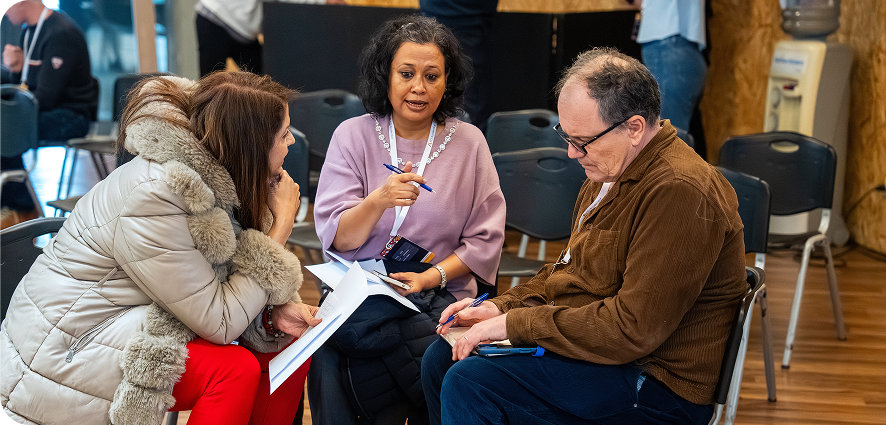
At the core of the EO experience is Forum, a small group of six-to-10 fellow entrepreneurs who meet monthly in a confidential, structured setting. EO Forum is not a networking group or a mastermind. It is a space where founders can share real challenges, including the ones they cannot discuss with their employees, investors, or family, and receive genuine perspective from peers who understand the founder experience from the inside.

The format is designed to produce the kind of honest exchange that accelerates leadership growth faster than most formal programs. Members consistently cite Forum as the single most valuable element of their EO membership. 
EO’s Path of Leadership

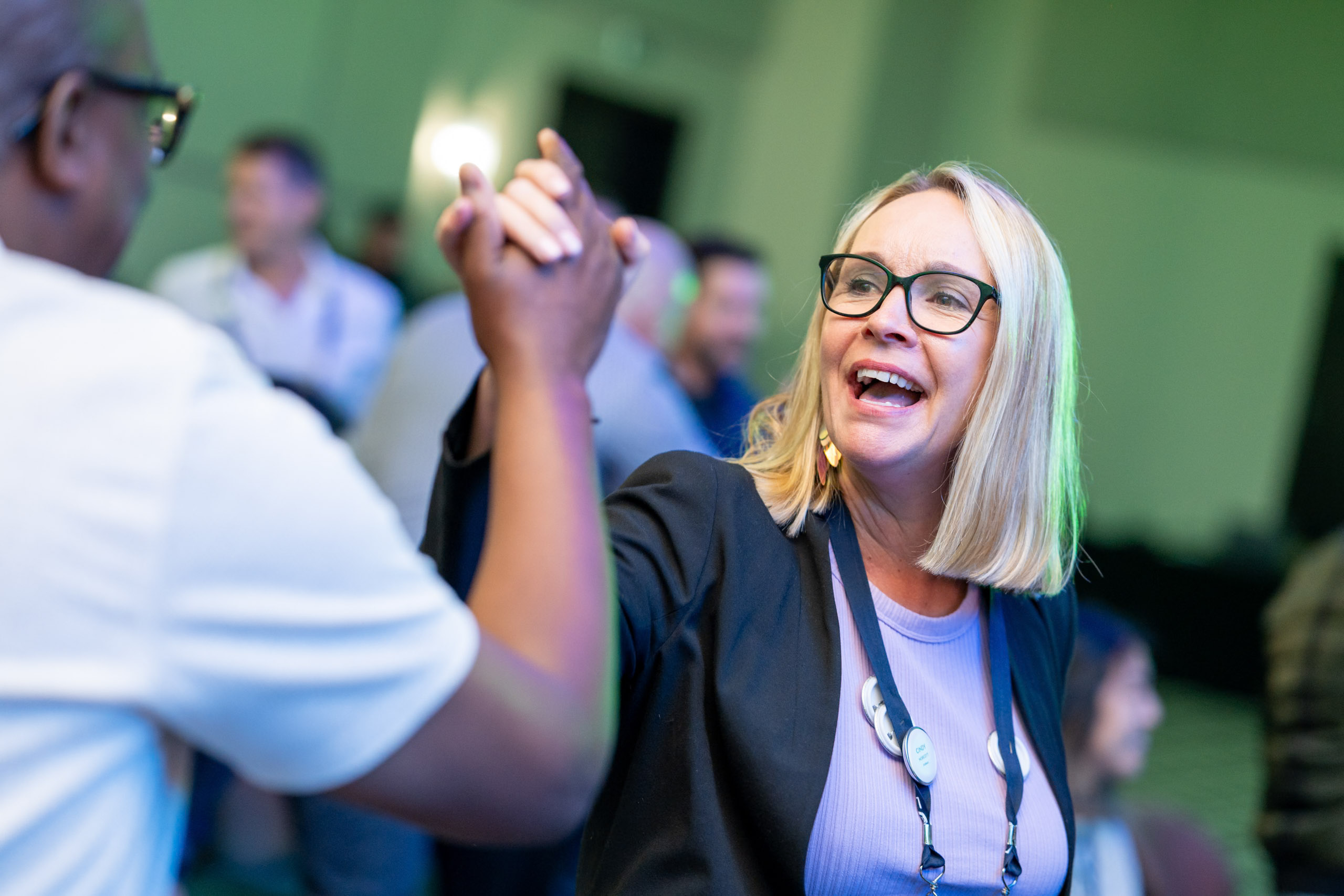
For members who want to contribute to the organization while developing their own leadership capabilities, EO offers a structured Path of Leadership that spans chapter, regional, and global levels. Roles range from Forum Moderator and Chapter President at the chapter level to Area Director and Regional Chair at the regional level, all the way to the EO Global Board of Directors at the global level. 

Serving in these roles is not ceremonial. It is active leadership development: managing teams, navigating complex stakeholder dynamics, running strategic initiatives, and learning to lead people who do not report to you in a traditional sense. Many EO members describe their leadership roles within EO as among the most formative experiences of their entrepreneurial careers. 

Executive Education Programs

EO’s portfolio of executive education programs gives members access to world-class learning experiences that are purpose-built for entrepreneurs:

  • EO with Harvard Business School:  A four-day program on Harvard’s Cambridge campus where up to 97 members work directly with faculty to develop creative strategies for evolving industries through case studies and small-group discussion. 
  • EO@Wharton: Elevating Finance + Operations: A five-day program at The Wharton School of the University of Pennsylvania focused on financial acumen and operational excellence. Members review their own profit-and-loss statements and receive faculty guidance on the financial challenges specific to growing businesses.
  • EO/London Business School Growth Forum: A four-day London program centered on building actionable growth plans using EO/LBS case methods. The curriculum refreshes annually, and members who complete seven years earn an EO/LBS Alumni certification. 
  • EO@INSEAD:Discover the Leader Within: A five-day program at INSEAD’s Singapore campus focused on team leadership and corporate culture. Members develop servant leadership skills and learn to build high-performance cultures alongside a cohort of up to 50 global peers. 
  • Global Speakers Academy (GSA):A five-day intensive held in a new destination each year, GSA combines one-on-one coaching, presentation practice, and peer feedback to help entrepreneurs become powerful, persuasive communicators. 
  • Entrepreneurial Masters Program (EMP): A three-year program created by EO's founders in 1989, EMP meets for four days annually in Dedham, Massachusetts. Accepted by application, up to 68 members per year go deep on strategy, finance, leadership, and execution. 
EO Accelerator

For entrepreneurs who are earlier in the journey, EO Accelerator is a structured program designed to help founders with businesses generating between US$250,000 and US$1 million in revenue build the foundational skills and systems needed to break through to the next level. It is where many future EO members begin their formal leadership development. 

Instead of strict curriculum, EO's approach to leadership development is built around an ecosystem: peer accountability, structured learning, real leadership roles, and world-class education, all designed around the specific realities of running and scaling a business. 

Frequently Asked Questions

What makes entrepreneurial leadership different from corporate leadership, and why does it create a “leadership gap” as companies scale?

Entrepreneurs are the vision, culture, and final decision-maker all in one—without the built-in structures corporate leaders rely on. As the company grows, the same traits that worked early (speed, control, doing it yourself) become liabilities. Isolation, identity attachment to control, and lack of time for deliberate development widen the gap. The fix is to deliberately evolve how you lead—delegating, developing others, and building systems—because leadership is learnable, not fixed.

Where do most founders get stuck in the leadership journey, and which skills close that gap?

Most hit the wall at Stage 2 (scaling toward US$5M–US$10M), when doing must give way to directing. The skills that close the gap are delegation and trust-building, clear communication and culture-setting, and deeper self-awareness. Without them, founders become the bottleneck; with them, the organization scales beyond the founder’s personal capacity.

How does EO Forum accelerate leadership growth compared to typical networking or mastermind groups?

EO Forum is a confidential, structured peer group of 6–10 entrepreneurs that meets monthly to tackle real challenges founders cannot discuss with employees, investors, or family. It is not a networking club or mastermind; it is engineered for honest exchange and practical perspective from true peers. Members consistently cite Forum as the most valuable part of EO because it shortens learning cycles and makes leadership growth continuous.

If I want to improve my leadership this week, what is the simplest practice to start—and how do I make growth systematic?

Start with one hour of weekly reflection: Which decisions did you make, what would you do differently, who did you develop, and who did you neglect? Then systematize growth by scheduling regular 360-style feedback, surrounding yourself with peers who tell you the truth, investing in formal education at key inflection points, and budgeting leadership development as a line item so it actually happens.

I’m earlier in revenue—should I consider EO Accelerator or full EO, and what outcomes should I expect?

If your business generates between US$250,000 and US$1 million, EO Accelerator is purpose-built to help you install the foundational skills and systems to break through to the next level—and it is where many future EO members start. Full EO membership then layers on the Forum experience, executive education, and the Path of Leadership—an ecosystem of peer accountability, real leadership roles, and world-class learning tailored to the realities of scaling a company.

"Personally, I have learned to be more of a compassionate leader, rather than a dictator. I have become far more compassionate. And that has helped me not only in the leadership as a father, a husband, or a friend, but also in my business life."

Jag Gill, EO Houston
Robin Davis
Alex Jacobi

"Leading other leaders takes a lot, it takes inspiration, it takes a whole lot of listening and continual learning, so I just love learning from others and there is just so much difference we can make by leading leaders, we learn to lead ourselves, we learn to lead our families, we learn to make a difference in the world."

Kim Liddell, EO Pacific Diamond Bridge

"EO leadership is really not about doing what I want to do, it is really about having conversations with others that are around you, listening to all ideas and really through conversation figuring out which is the best way forward for the organization for us to deliver our purpose and do this in line with our values."

Deepinder Bedi, EO New Delhi
Sharmilee Sagar
Mark Bealin

"Leading in EO is more demanding and rewarding because you get to lead leaders, and leading leaders is a different thing than starting your own company."

Monica Escoto Romo, EO Guadalajara

Next Steps: Learn More and Apply to Join EO

If you are an entrepreneur who values growth, perspective, and trust — and wants conversations you cannot have anywhere else — EO may be the right peer community.

What are the next steps?

EO is a community by entrepreneurs, for entrepreneurs that is purpose-built to help individual leaders grow, contribute, and unlock greater leadership potential. It was founded by entrepreneurs in 1987 and is still led by member entrepreneurs today. We welcome ambitious business owners from any industry, culture, generation, and geography. Find true belonging in EO, and become even more.