
 Login
Login


GSEA 20th Anniversary Spotlight: For a Young Kenyan Entrepreneur, the Fourth Time Was the Charm
September 24, 2026
Published in:
How Collins Kathuli turned three GSEA competition losses and one big win into a network, funding, and the confidence to scale one fintech company and launch another.

To celebrate the 20th anniversary of the Global Student Entrepreneur Awards (GSEA), marking two decades of mentorship and empowerment in motion, Entrepreneurs' Organization (EO) is catching up with past competitors to learn how their GSEA experience shaped their trajectory and impacted their lives.
Every so often, 25 year old Kenyan Collins Kathuli opens a YouTube video to watch himself lose.
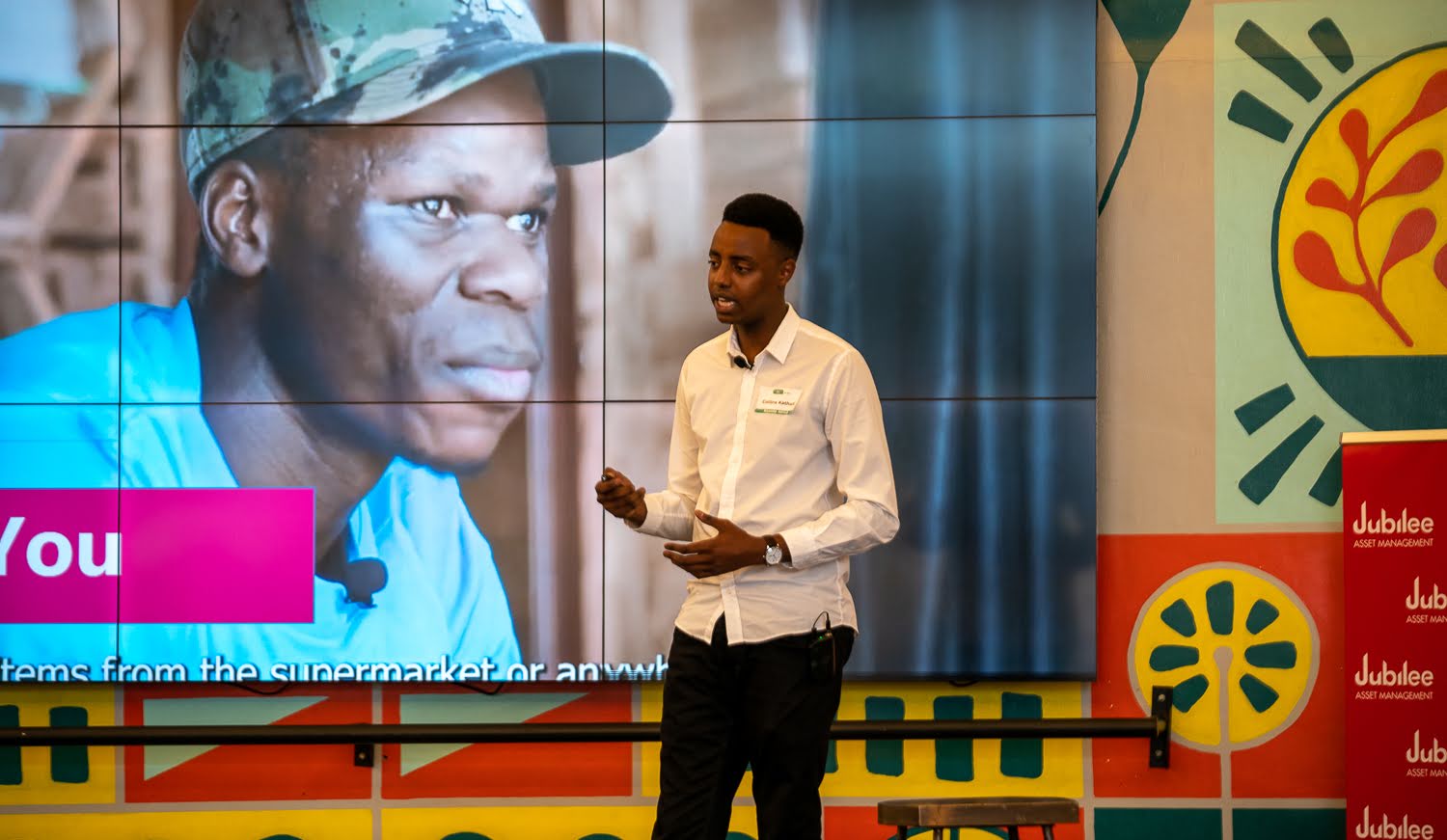
The clip is from the 2020 Kenya Global Student Entrepreneur Awards (GSEA) competition. He was 20 then, standing onstage in Nairobi in front of the largest cameras he has ever seen. He has never pitched before, and it shows.
"I thank God they have never taken down that video," he says. "It is always good to see how tiny I was on that stage."
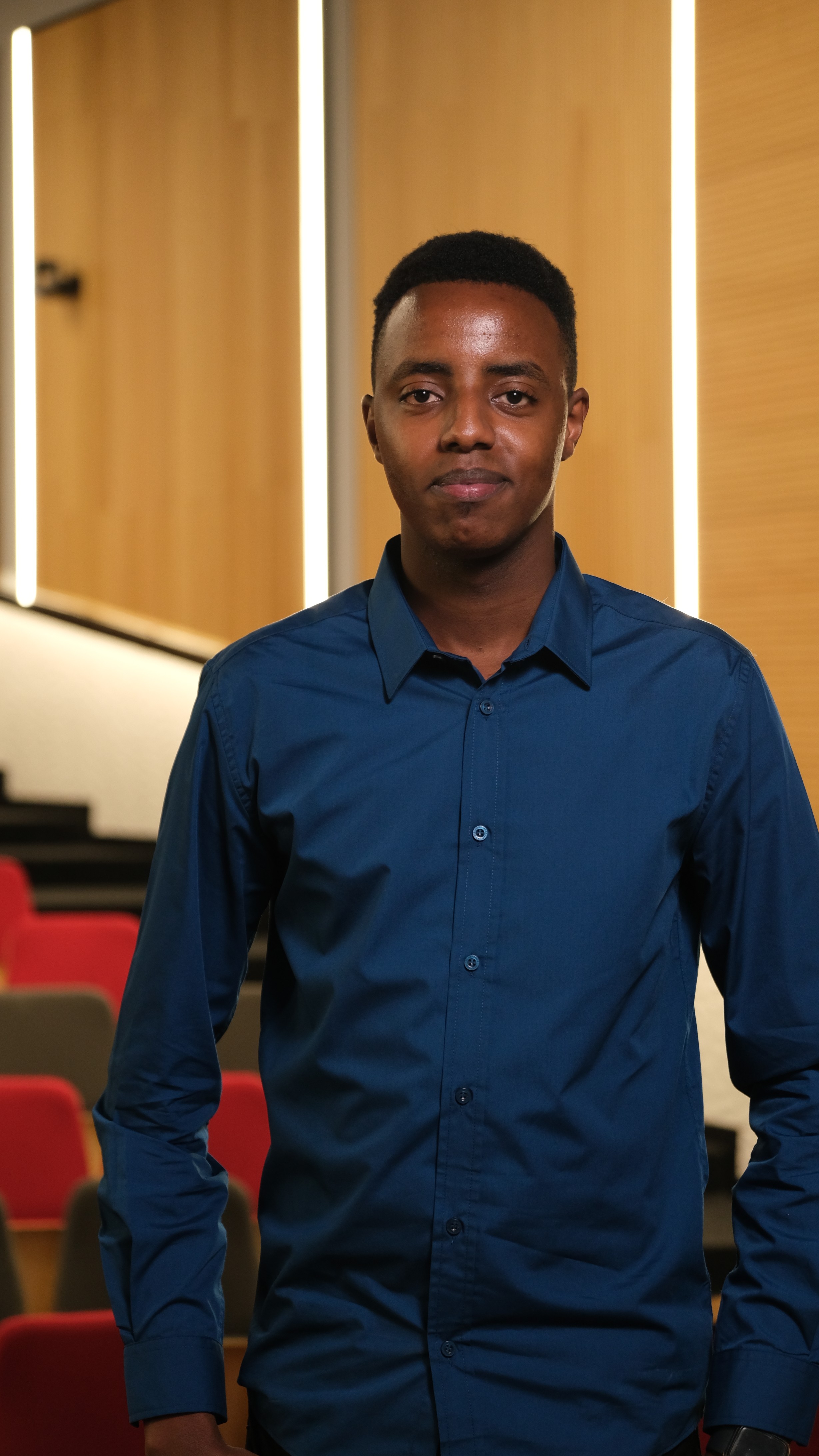
Collins Kathuli
From Data Sales to Banking
Collins grew up in Machakos, about two hours outside Nairobi, in a family of entrepreneurs. "While still in high school, I kept asking myself, am I the next?" he says.
During a gap year between secondary school and university, Collins taught himself to code through online tutorials. With his co-founder, Emmanuel Manani, he built Kyanda Africa, a simple app for topping up airtime and data on cell phones. When the pandemic hit, his worried customers wanted to buy airtime in smaller amounts, so Collins added a simple wallet where users could store funds before spending. Transfers between wallets were internal, so Kyanda made them free.
Customers quickly grasped the implications and began using the wallet to send money to one another. Volumes climbed sharply, and Collins pivoted the company, commercializing the product its users had invented.
It was not always smooth sailing. Amid constantly shifting rules, Kyanda soon needed a banking license. Collins went to the Central Bank of Kenya himself.
"Just imagine. I am 20 years old, and I am trying to convince someone at one of the biggest banks in Kenya to give me a license," he says. Amazingly, it worked. They saw his persistence, made introductions, and soon Kyanda secured the partnership it needed to obtain a license. The months of uncertainty nearly ended the company, but they also gave Collins a way to give back to his community by broadening financial inclusion and cutting mobile transaction costs for unbanked Kenyans.
Helping Others and Getting Help in Return
For Collins, unbanked means more than simply lacking a bank account. It can describe someone who lives far from financial infrastructure, finds traditional banking too expensive or too complicated, or simply does not trust the system. His companies have focused on making financial services easier and less expensive for people outside that system.
Collins understood how much access mattered from his own career.
When he first entered GSEA, he knew how to build a product but not how to pitch it. Although he did not win, he met experienced business leaders who continued mentoring him long after the competition.
“The mentors would hold my hand for the rest of the year,” he says. “I could always connect with them.”
His first mentor, Ankit Sanghrajka (EO Kenya), owner and director of Tile & Carpet Center, stayed in touch long after Collins’s 2020 GSEA loss. When Collins entered the competition again in 2022, he met Karim Jetha (EO Kenya) of Sayani Investments, who helped him rebuild his pitch deck. Jetha also helped him practice one-on-one until he could pitch without notes. After the competition, their conversations shifted to whether Collins should pursue his B2C model or switch to a B2B.
Nevertheless, Collins entered GSEA in 2023 and lost again.
A New Pivot and a GSEA Win
On his fourth attempt in 2024, he won the Kenya GSEA competition, advanced to the MEPA global quarterfinals in Oman, advancing all the way to the global finals in South Africa. Along the way, he met Arshad Bholim (EO Uganda), who became another important mentor and introduced him to investors.
By late 2024, Kyanda had raised about US$250,000. His years of persistence had begun to pay off. “The startup ecosystem was slowly becoming a small village,” he observes.
By 2025, Kyanda had grown to 18 employees across Kenya and South Africa. But the B2B question Jetha had raised three years earlier had never quite gone away. Collins explains that across Kenya, groups of people who cannot access banks, most of them women, pool their savings and lend to one another in “savings groups.” They keep records by hand in paper books, and often store their money under mattresses.
In May 2025, Collins launched Oliq Africa to serve these savings groups with affordable software and solar-powered devices for areas where electricity or internet is unreliable. Now, their money is pooled with partner banks that pay real returns. As Collins puts it, "We have rescued this money."
In its first year, Oliq has onboarded more than 150 savings groups representing over 12,000 members, along with seven larger, formally registered credit unions. The company has raised roughly US$57,000 in grant funding while pursuing an equity round. Collins reports, “People see the initiative we are running and decide to give us grants. They trust the process and can see us serving a market that is quite untapped."

Paying it Forward
Collins is careful not to make any of this sound easy.
Typical of many founders, he says, "Sometimes you would wake up and feel so low because you do not know what to do. You do not know what to tell your team members because they are fully relying on you. So you have to put on that fake smile."
He did exactly that when he was certain the company was not going to make it. Meanwhile, he called founders for advice and made sure to take weekends away from the business.
These days, Collins returns to GSEA competitions to watch, be inspired, and to inspire others. He mentors younger founders and expects to eventually invest in some of them. He wants the next 19 year old to arrive on the GSEA stage already knowing how to pitch, rather than having to learn it in front of the cameras as he did.
When asked for advice, he tells them, “Just get started.” The people they meet at GSEA “might be your biggest investors tomorrow. They might be your biggest clients tomorrow. They might be your biggest connector to the next big partnership. So as young as you are right now, please go for it."
Collins Kathuli is a four-time GSEA competitor, the 2024 GSEA Kenya National Winner, a GSEA Global Finalist, and the co-founder of the fintech companies Kyanda Africa and Onliq Africa. Interested in competing? Learn more about GSEA and apply here.
 More EO GSEA Journeys

GSEA 20th Anniversary Spotlight: Solve the Hard Problem, Not the Easy One
How 25-year-old Onni Eriksson turned that advice — and two trips to GSEA — into AIATELLA, an AI startup taking on the world’s biggest killer.

How One Entrepreneur Went from the Music Industry’s Most Sought-After Web Designer to a Tech Company CEO
Brendan Ciecko's 2007 experience as a Global Student Entrepreneur Awards finalist at 18 was a thrill. Two decades later, he is still reaping rewards.

U.S. College Student Named Global Champion in Entrepreneurs’ Organization’s Global Student Entrepreneur Awards
Columbia University’s Vienna Sparks earned the top spot and grand prize in EO’s annual competition, which included more than 1,400 students from around the world.