
 Login
Login


How Your Team Can Master AI Through a Live Agent Competition
April 1, 2026
Published in:
Most AI training falls short because it emphasizes theory instead of real-world application. A hands-on AI agent competition format can show your team how to turn curiosity into working tools that result in real adoption.
Most entrepreneurs and business leaders do not need another AI keynote. But you may benefit from an inspiring format that turns your team’s curiosity around AI into capability. Most AI training still fails for a simple reason: It mandates people use the technology instead of teaching them to use it well.
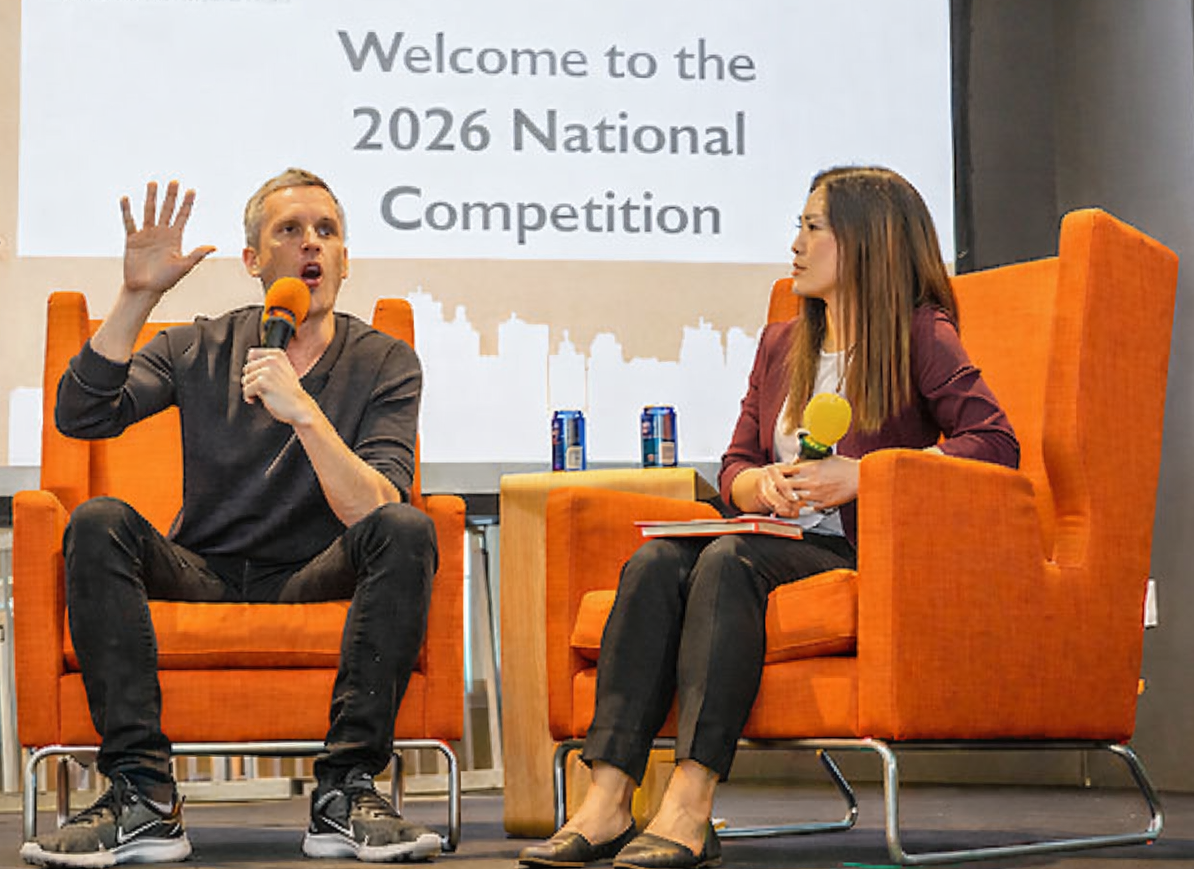
The American Society for Nondestructive Testing (ASNT) took the opposite path. At its 2025 annual conference, it elevated the final round of its ASNT Battle of the AI Agents as part of a broader event that promised hands-on demonstrations. That matters, because organizations do not build AI capability through passive exposure. They build it by making people solve real problems, under real constraints, in front of other people.
For EO members, that makes what ASNT did more than an interesting association story. It is a usable blueprint. The point is not to copy every detail of the nondestructive testing (NDT) setting. The point is to borrow the mechanics that made the format credible: Prepare your people before the event, tie the work to actual workflows, create a live-build environment, put the demos on a clock, and treat the winners as the start of adoption rather than the end of a workshop.
How To Define an AI Challenge People Can Actually Build
Step one is preloading the room before anyone walks into it. ASNT did that with its AI Agents in Nondestructive Testing webinar, which introduced no-code AI agents for inspection engineers, quality managers, and technicians, and promised practical outcomes rather than abstract futurism. The course overview focused on workflow transformation, real examples in inspection and compliance, a first-agent build, and data-management discipline.
That is the first lesson leaders can copy: Do not make your workshop the first time participants encounter the material. Give them a short pre-brief that lowers anxiety and shows what a good agent looks like.
Step two is choosing a challenge narrow enough to finish and important enough to matter. ASNT’s webinar framing stayed close to actual NDT work, and that is what gave the later competition its seriousness. This is where many AI events drift into theater. They pick prompts so broad that teams build toys, or so vague that every group solves a different problem.
To keep your group on track, pick one business workflow with visible stakes: proposal generation, service-ticket triage, meeting follow-up, client research, inspection reporting, or compliance documentation. A good challenge should be small enough for a live sprint yet concrete enough that a strong prototype could become a pilot within weeks.
Leverage a Public Build Format to Turn Learning Into Performance
Step three is making the build public. ASNT did not hide its AI initiative in a quiet breakout room. It placed the battle within a flagship conference that emphasized new technology, career growth, and hands-on learning. That choice changed the psychology of the exercise. Once people know they will have to show working output in front of peers, they stop theorizing and start deciding. They simplify. They test. They cut weak ideas. They build.
Step four is coaching the sprint instead of lecturing through it. The ASNT model worked because the education did not end with a webinar, and it did not devolve into unstructured experimentation on site. The event sat inside a professional learning environment, and the webinar itself stressed step-by-step construction, real-world use cases, and data quality control.
Leaders can emulate what ASNT did so successfully: Staff your room with facilitators who unblock teams, challenge fuzzy use cases, and keep attention on delivery. Publish judging criteria in advance. Require every team to produce a defined set of outputs by the final bell: the workflow, the agent, the data source, the business value, and the risk controls.
There is strong evidence behind this design. A classic active-learning meta-analysis in Proceedings of the National Academy of Sciences found that learners perform better when they engage directly with problems instead of mainly listening to lectures. A widely discussed Quarterly Journal of Economics study on generative AI in customer support found that the technology delivered meaningful productivity gains, especially for less experienced workers. ASNT’s case matters because it translated those principles into a conference format that members could actually experience.
Finish By Turning the Battle Into an Adoption Engine
Step five is treating demo day as the beginning of implementation. The strongest thing about ASNT’s AI effort is that it did not appear as a one-off stunt. It sits inside a broader ecosystem of AI-oriented education from ASNT and a professional association already positioning itself around technology, standards, and workforce development. That larger context is what company leaders can emulate. Your battle should both end with winners and also produce a shortlist of prototypes ready for controlled pilots.
That means executive judges, recorded demos, and a two-week decision window after the event. It means asking teams for a short build sheet covering workflow, permissions, data dependencies, and oversight needs. It means returning at the next leadership meeting with proof of movement on cycle time, accuracy, responsiveness, or client experience. Once that loop exists, the workshop stops being merely inspiration and starts becoming operating infrastructure.
Lessons Learned
The most useful thing about ASNT’s AI Agent Battle is not that it was novel. It is that it was organized. The association paired a preparatory webinar with a visible live challenge and placed both inside a serious professional event.
For entrepreneurs and business leaders, that translates into a clean five-step playbook that your team can adopt to help your divisions learn AI in a hands-on, adoptable way that is productive, informative, and competitive:
- Prepare people before the event
- Define one buildable challenge
- Make the sprint public
- Coach teams to working demos
- Move the best prototypes into pilots
That combination is what makes ASNT a case study and a template at the same time.
Contributed to EO by Gleb Tsipursky, PhD, who serves as the CEO of the future-of-work consultancy Disaster Avoidance Experts and wrote ChatGPT for Thought Leaders and Content Creators.
Check out Dr. Gleb Tsipursky’s other recent contributions: