
 Login
Login


The Accidental Artist: Entrepreneur-Turned-Painter Uses His Creativity for a Cause
May 18, 2026
Published in:
Francisco Prado (EO El Salvador) spent 30 years building businesses in a culture where he was told art "was not for men." Now his paintings are helping women escape violence.

Francisco Prado was a senior in high school when he found himself walking home from school behind a girl he did not know. Five guys were waiting for her. When they started harassing her, he did not think. Instead, he dropped his bags and took them on.
Five against one was not a fair fight, not even for someone who had spent years competing in junior boxing tournaments, winning almost every bout. "She got away,” he says. “I didn't.”
The fight itself lasted only minutes. What stayed with him was the realization that, in the El Salvador where he grew up, “what happened to that girl was considered normal.” Francisco could never accept that.
"Whenever I see something going on that is not right, something very deep within me tells me that ‘that is not okay.’"
It would take him 30 more years, an engineering degree, a string of businesses built and sold, and a global pandemic, to figure out what to do about it.
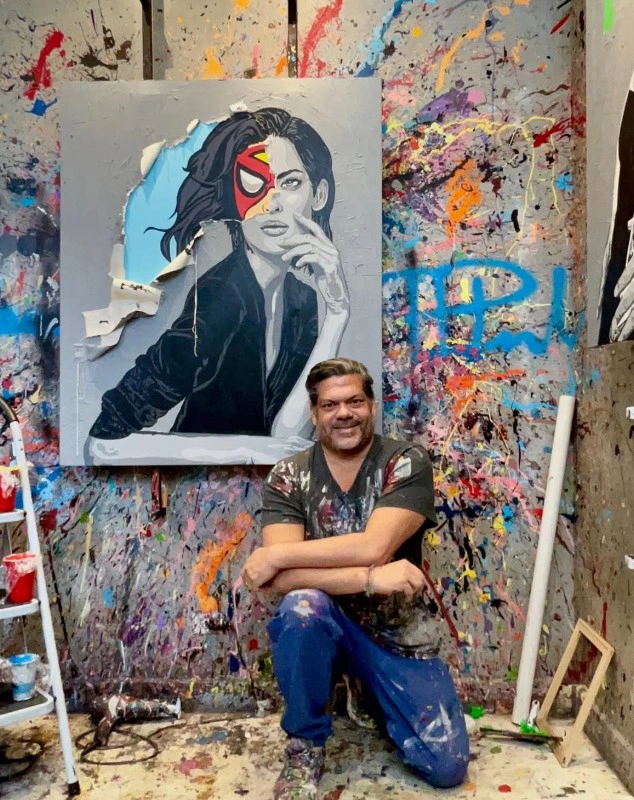
Francisco Prado (EO El Salvador)
A Family Business
Francisco came from a long line of entrepreneurs. His grandfather arrived in El Salvador from Nicaragua at a young age and eventually built one of the country's largest consumer electronics retail chains: Prado.
"It was actually a finance company masquerading as a retailer," he says. They sold televisions, refrigerators, stoves, and furniture to 80 percent of the population that could not afford to pay up front. Long-term credit was often stretched over years. When customers paid off one item, they would come back for the next.
As a child in an entrepreneurial family, Francisco learned early that the business was everything. "We had nice things and went on good vacations when the business did well,” he says. “When it did not, we had happy but not-so-happy Christmases." His father started putting him to work at age 8, building bikes, delivering appliances to clients, and learning every corner of the operation. “Child labor laws,” he notes, “were not a significant obstacle.” His first paycheck was a camera, which he asked for because his father had already told him that asking for paints and canvases was “for women and bohemians.”
His mother was a painter. She sewed and sold her own clothing line, cooked, and held her own art exhibitions. Francisco spent his school years filling notebook margins with doodles and thinking in pictures. He wanted to study architecture. His father refused. He proposed medicine. They compromised on engineering.
He graduated cum laude from the University of Notre Dame, came home, took a job with an airline, and hated it immediately.
His grandfather noticed and told Francisco that he was “not born to make money for anybody else.” He told Francisco to bring him a business plan, and he’d lend him the capital.
Francisco proposed an office supply store modeled on the Office Depots he had loved back in Indiana. His grandfather loaned him the capital — at 36 percent annual interest. In addition, his grandfather insisted on owning 60 percent of the business.
"I was 21 years old," Francisco says, explaining why he took the terrible deal.
At first, it did not go as planned. "Like any entrepreneur, you start your first formal business, and you find out that your plan doesn't really matter.” He felt, he says, like a total failure.
But the engineer in him kicked in. He started asking what the business was trying to tell him. “Businesses talk,” he explains, “in numbers.” He hired his bank executive to teach him everything she knew about finance. Then he bought books and taught himself the rest.
It worked. Seven years later, he sold the business to Office Depot in another terrible deal. He was 30 years old, recently married, and his first daughter was on the way, "It was not a good negotiation," he says. But he was able to repay his grandfather and move on with a little left in the bank.
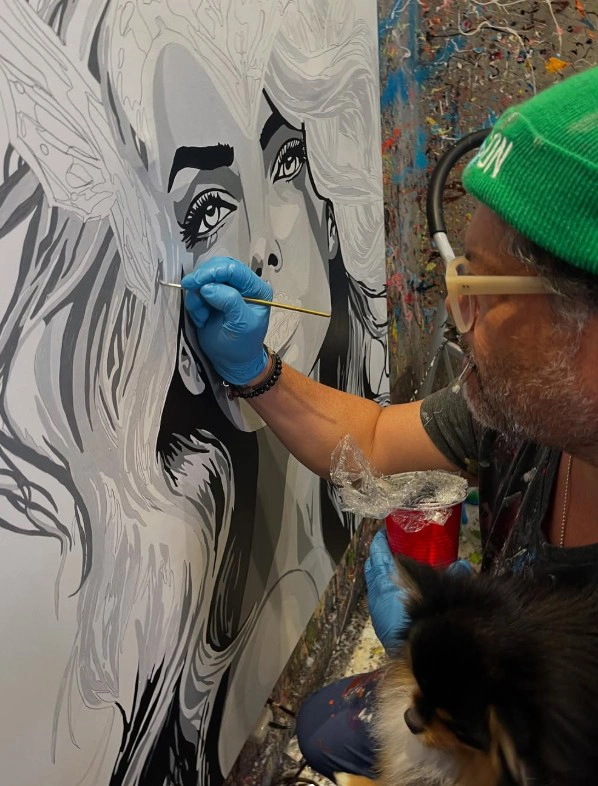
The Family Empire
He did not get long to catch his breath. In 2002, his mother passed away, and his father was devastated. In his despair, he brought Francisco in to run the family business. By now, it had more than 3,000 employees and over 40 retail locations across El Salvador.
The complications were immediate. His grandfather had six children, which meant there were five aunts and uncles, eighteen cousins, and a sprawling extended family, all with opinions. "Not everybody was happy with me taking over," he notes.
The business itself was large, but it was being run as a mom-and-pop operation. There was no budget. No weekly staff meetings. No formal management structure. He brought in family consultants to manage the family, which he found harder than managing the business itself.
When an offer came in 2006, he was ready. This time, he did his homework. He negotiated hard, and everybody walked away happy.
He walked away, though, out of a job.
Starting Over
After the sale, Francisco bought into a consulting firm, hated it, and within two years sold his shares. Then he found a distressed IT company and acquired it by absorbing its debt. That company became Softnet Inc, which develops custom software to digitize business processes for companies across Latin America.
It was around this time that he joined Entrepreneurs' Organization (EO) via its El Salvador chapter. At the time, the chapter only had 14 members, but has since grown to 84. The experience has been life-changing. He especially benefited from the help of the women in his Forum. For example, he began having trouble with his business partner, who was also his best friend. They had different visions for the company, and neither knew how to fix it.
The men in his Forum shared their war stories, offered comparisons, and told him to cut ties fast. Then the women in his Forum spoke up. One of them described a conflict with her mother. She said her mother had always been aggressive, and she had always been passive. She explained how this left her feeling bulldozed and how much it hurt not to be considered an equal.
"I recognized myself," Francisco says, "as the bulldozer in the relationship."
It was not a perspective he would have found on his own. He bought a bottle of scotch, drove to his partner's house, and told him, “The friendship cannot be lost. We have to figure this out." They split the business and remained friends. "I do not think I would have saved that relationship if it hadn't been for the women in my Forum,” he says.

A Blank Canvas
When the pandemic hit in 2020, most of Francisco's clients shut their doors. He went from working ten hours a day to one. For a self-described workaholic with ADHD, that was its own kind of crisis.
His brother-in-law, a trained artist and art curator, shipped over a stack of canvases, a box of paints, an assortment of brushes, and a simple message: "You have nothing else to do. Go crazy.”
Francisco propped a canvas against the bathroom wall and stood in front of it. He knew neither how to hold a brush nor where to start, but he did know how to throw a punch.
He grabbed his boxing gloves, covered them with paint, and started swinging.
"Paint was just flying everywhere," he says. When he stepped back, he saw the suggestion of a woman's hair in the mess of color, blowing in the wind. He picked up a brush and drew her in.
After posting it on Instagram just for fun, an EO member called. His wife loved it. Could they have it?
"How much?" the member asked.
"I have no idea," Francisco said. He sent it for free. The member sent back two bottles of his favorite scotch. "So, I said, ‘hey — it is worth around 300 bucks.’"
The member then asked him what the painting meant. Francisco heard himself say, “It is a protest against violence against women.” And, as he puts it, “That became my cause." The memory of that girl in the street had never really left him. Now he had something to do with it.
He found an organization in El Salvador called Colaectiva Feminista, which provides psychological, emotional, and legal support to women trying to leave abusive relationships. A portion of the proceeds from every painting he sells goes directly to them. To date, his work has helped more than a thousand women get out of domestic violence situations.
"It does not sound like much," he says. "But for me it is something that is really making a difference."
His paintings have evolved since those first swings of a paint-filled boxing glove. He still uses the gloves occasionally, but now works mostly with brushes. Every painting features a woman. He calls his current series "The Cards You're Dealt." It explores the resilience of women who carry enormous weight while the world sees only their composure.
"Unless you know them and they are telling you about it, you do not see it," he says. "Because they always have this beautiful face on. They are always ready. And it is something guys cannot do."
His painting and his cause led him to become a Global Speaker’s Academy (GSA) certified speaker. His talks center on the idea that your hidden talent might just be the one that heals the world.
Francisco Prado is a member of EO El Salvador and the founder of Softnet Inc. His work supporting women and children affected by violence can be found at his Instagram page @ttprado.art and on his website. Interested in becoming an EO member like Francisco? Learn more here.
 More EO Member Journeys

How EO Expands Worldview with Culture, Connection, Community
EO expands its members’ horizons not only through executive education—but also with shared human experiences that deepen understanding across cultures. Attendees at an EO Houston dinner share what they learned from an invitation rooted in faith and connection.

International Women’s Day Spotlight: Puerto Rican Entrepreneur Builds Business and Balance, Paving the Way for Other Women To Do the Same
How Azalea García Corujo (EO Puerto Rico) launched her own thriving HR consulting firm and provided flexibility and opportunities for other talented, ambitious women in her home country.

Secret Ingredients: The Power of Mentorship in EO
How Entrepreneurs' Organization's Accelerator program and one devoted EO mentor helped a driven founder and her cookie company, Sweet Loren's, scale from US$80,000 to over US$100 million.