
 Login
Login


When Loss Enters the Workplace: Leadership in the Shadow of Grief
May 1, 2026
Published in:
After the sudden loss of her mother, a founder reflects on what grief revealed about leadership, resilience, and business design. Her experience underscores the importance of building companies—and cultures—that can endure life’s hardest moments.
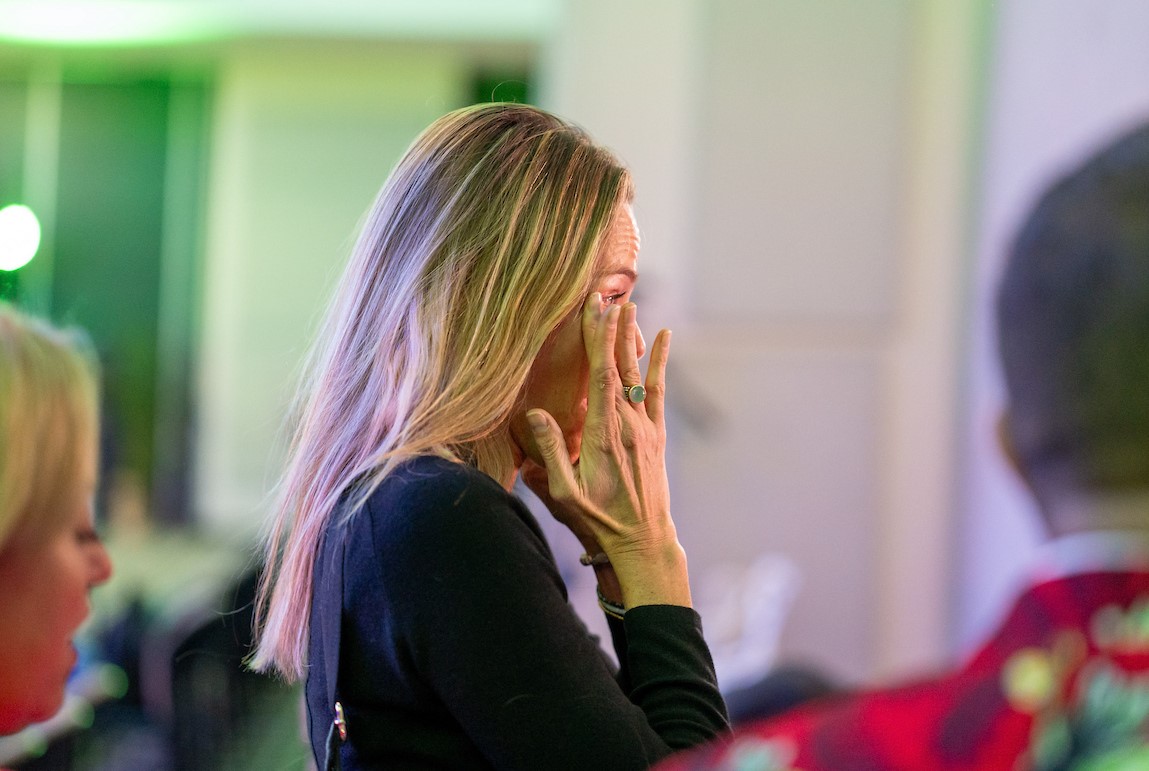
I recently lost my mother after a sudden medical crisis.
For weeks, I sat by her side. Time slowed down, and I found myself “stuck” in it, without the power to fix anything or do much beyond simply being there. Waiting. Listening. Holding hands. Loving someone through the unknown.
Then I planned her service.
We like to believe we are in control, and in some ways, we are. We make decisions about how we build our companies, how we lead our teams, and how we structure our days. There is real agency in that. But the last few weeks have reminded me that our control has limits, and death has a way of making those limits impossible to ignore. It is the ultimate lesson in humility. It reminds us that while we can shape how we respond to life, we cannot master life itself. At the core, we are all still living within something fragile, unpredictable, and deeply human.
That experience didn’t just change me personally. It changed how I think about leadership.
When the Business Has to Run Without You
As the founder of a PR firm, I have always understood the importance of building a company that does not depend entirely on me. But understanding something intellectually is very different from testing it in reality.
When I stepped away, my company kept running. Client meetings were held. Content was written. Media placements happened. The work continued without much interruption.
That was not luck. It was the result of intentional decisions made over time to ensure I was no longer the bottleneck.
In a moment where I had nothing left to give professionally, the business held.
That, in itself, was a quiet form of resilience.
At the same time, the experience exposed gaps.
Like many growing organizations, we had areas where too much knowledge or responsibility sat with a single individual in our leadership team. It became clear how fragile that can be. One person unavailable at the wrong moment can create unnecessary strain.
Since then, I have thought more critically about redundancy and about documenting processes more rigorously. About ensuring that no role is so singular that it cannot be supported or temporarily absorbed by others.
Not because we expect the worst, but because life happens.
Culture Is What You Model in Real Time
The most unexpected lesson, though, was about vulnerability.
After returning to work, I found myself on a client call with one of my team members. At one point, I became emotional and teared up. There was no way to hide it.
To my surprise, that moment, as uncomfortable as it was, created a different kind of connection. Not just with the client, but with my team member who witnessed it. It reinforced something I have always believed but had not fully lived in that way: Culture is not what we say, it is what we model.
We often talk about bringing humanity into the workplace. About creating environments where people feel seen and supported. But those values only become real when they are practiced.
Leadership is not about being composed at all times. It is about being honest about what it means to be human.
Designing a Workplace That Can Hold Loss
Finally, this experience forced me to look at the systems we have in place to support our people through loss.
Grief is one of the most universal human experiences, yet it remains deeply uncomfortable in professional environments. We don’t always know what to say. We worry about saying the wrong thing.
It made me ask harder questions about what we offer as an organization. Not just culturally, but practically. Do we provide enough bereavement time? Do we support employees with resources like life insurance or funeral cost assistance? Are we prepared to meet someone not just as an employee, but as a person navigating one of the most difficult moments of their life?
These are not fringe considerations. They are fundamental to building a company that actually takes care of its people.
Loss has a way of clarifying what matters.
It strips away the noise and forces you to confront what is essential. In business, we often measure success through growth, revenue, and visibility. Those metrics matter. But they are not the full picture.
Resilience matters. Redundancy matters. Humanity matters.
Because at some point, for all of us, time will slow down again. And when it does, the systems we have built and the culture we have created will either hold us or fail us.
The question is whether we are building with that reality in mind.
Contributed by Claire Angelle, an EO Accelerator in Atlanta who is the founder of Elevia, a mission-driven PR company that combines her commitment to solving the world’s biggest environmental and societal challenges with her passion for storytelling.
Related posts of interest: