
 Login
Login


Why Incorporating Generative AI Gets Easy When You Approach It This Way
December 19, 2025
Published in:
Peer mentoring accelerates generative AI adoption by pairing employees with colleagues who understand both the tools and the realities of their roles. Adopting this human-centered approach boosts productivity, strengthens culture, and turns Gen AI from intimidating technology into a shared advantage.
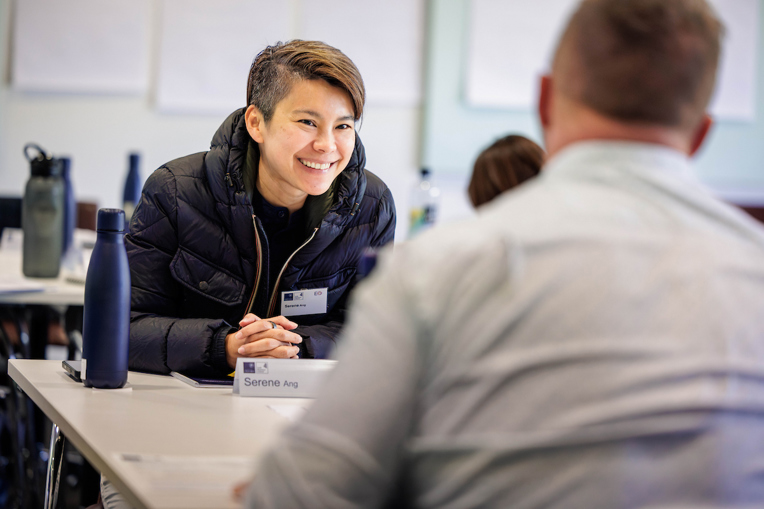
Peer mentoring is a transformative strategy that can revolutionize how organizations embrace generative AI (Gen AI). By leveraging the power of personal connections and shared expertise, peer mentoring accelerates learning, fosters collaboration, and fuels innovation. In today’s fast-paced business environment, where the mastery of Gen AI tools can mean the difference between staying competitive and falling behind, this approach is nothing short of essential.
The Human Element of Embracing Gen AI
Generative AI tools promise efficiency, creativity, and transformative possibilities, but for many employees, navigating these tools can feel daunting. That’s where peer mentoring steps in, offering a bridge between uncertainty and confidence. When employees learn directly from colleagues who have already mastered Gen AI, they gain not just technical know-how but also context-specific insights tailored to their unique roles.
Imagine being guided through a new tool by someone who understands the nuances of your workload, rather than sitting through a generic training webinar. Peer mentors personalize the learning process, breaking down complex concepts and demonstrating their application in real-world scenarios. This one-on-one guidance makes Gen AI tools more accessible and, importantly, more relatable, while managing risks.
Empowering Early Adopters as Mentors to Embrace Gen AI
Organizations often underestimate the goldmine of talent within their own ranks. Early adopters of Gen AI—employees who have enthusiastically embraced AI tools to enhance tasks like coding, content creation, and data analysis—are an invaluable resource. Peer mentoring programs tap into this resource, positioning these employees as mentors who guide their colleagues toward Gen AI proficiency.

Peer mentoring offers a bridge between uncertainty and confidence when adopting generative AI.
Take, for example, one of my clients, a mid-sized professional services company whose leadership I helped recognize its Gen AI-savvy employees as catalysts for broader adoption. These early adopters, once scattered across departments, were brought together under a structured peer mentoring program. Their mission? To mentor colleagues eager to learn Gen AI tools but unsure where to start. This deliberate approach ensured the company didn’t just rely on scattered pockets of expertise but actively spread that knowledge across teams.
Building Bridges Through Tailored Learning for Embracing Gen AI
The beauty of peer mentoring lies in its flexibility and relevance. Unlike traditional training methods, which often feel detached from day-to-day responsibilities, peer mentoring sessions are tailored to the specific needs of mentees. For example, an employee in marketing might focus on content creation and effective Gen AI prompting, while a colleague in engineering could delve into coding automation.
This tailored approach was a hallmark of the aforementioned professional service company’s program. Mentors shared the practical tips and tricks they had discovered, demonstrated advanced techniques, and even helped troubleshoot challenges mentees encountered. Group workshops further amplified this knowledge-sharing, allowing mentors to showcase their expertise to a broader audience while building confidence among mentees.
A Win-Win for Mentors and Mentees
Peer mentoring doesn’t just benefit those learning Gen AI; it’s equally rewarding for the mentors. Early adopters gain recognition for their expertise, boosting their professional visibility and pride in their contributions. Mentors also develop their leadership and communication skills, positioning themselves as thought leaders within the organization.
Meanwhile, mentees experience an equally significant transformation. Armed with hands-on guidance and personalized support, they become more confident in their abilities to leverage Gen AI tools effectively. This confidence translates into tangible improvements in productivity and innovation, as employees feel empowered to experiment, iterate, and innovate.
The Ripple Effect on Workplace Culture
The impact of peer mentoring extends far beyond individual skill development—it transforms organizational culture. Over the course of a 12-month peer mentoring initiative, the professional service company observed a noticeable shift: employees not only became more proficient with Gen AI tools but also more eager to share their newfound knowledge with others.
In an era where technology often feels impersonal, peer mentoring injects a much-needed human touch into the learning process.
This knowledge-sharing created a ripple effect, fostering a culture of collaboration and continuous learning. Employees across departments connected over shared experiences, strengthening professional relationships and breaking down silos. The workplace evolved into a vibrant hub of innovation, with employees actively seeking out new ways to integrate Gen AI into their workflows.
Real Results for Embracing Gen AI: Productivity, Quality, and Innovation
The results of the peer mentoring program were undeniable. Productivity soared as employees streamlined their workflows with Gen AI tools, completing tasks faster and with greater precision. The quality of work improved as employees applied advanced Gen AI techniques to tasks like content creation, data analysis, and client outreach. And perhaps most significantly, the organization’s culture shifted toward one of enthusiasm for learning and innovation.
Metrics underscored the program’s success. Teams using Gen AI reported significant time savings of over 25%, while cross-departmental collaborations increased by 30%. Employees consistently rated the program as one of the most impactful initiatives for their professional growth, with many noting that it demystified Gen AI and made it feel approachable.
Why Peer Mentoring Is the Future of Embracing Gen AI
As businesses navigate the rapid evolution of Gen AI, traditional training methods are proving insufficient. Peer mentoring offers a dynamic, scalable solution that not only accelerates learning but also strengthens the fabric of workplace relationships. By harnessing the expertise of early adopters and fostering a culture of collaboration, organizations can ensure that their employees are not just users of Gen AI tools but pioneers of innovation.
In an era where technology often feels impersonal, peer mentoring injects a much-needed human touch into the learning process. And for organizations ready to embrace Gen AI, it can be one of the most powerful tools they have.
By Gleb Tsipursky, PhD, who serves as the CEO of the future-of-work consultancy Disaster Avoidance Experts. and wrote ChatGPT for Thought Leaders and Content Creators.
Check out Dr. Gleb Tsipursky’s other recent contributions: