
 Login
Login


Year of the Fire Horse: What Lunar New Year Teaches Entrepreneurs About Renewal, Culture, and Connection
February 11, 2026
Published in:
As we welcome the Year of the Fire Horse on 17 February 2026, EO members in China share how Lunar New Year shapes business rhythms, leadership, and identity. From intentional pauses to bold action, the holiday offers timeless lessons for entrepreneurs worldwide on renewal, resilience, and connection.
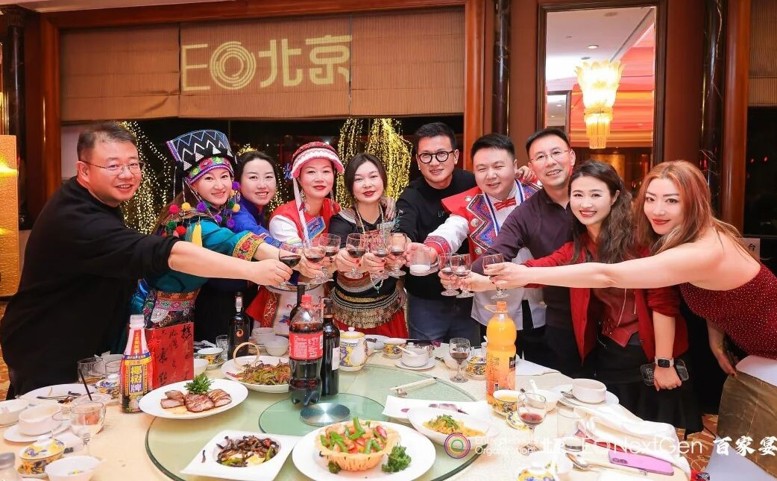
Are you ready for the Year of the Fire Horse? Officially celebrated on 17 February 2026, Lunar New Year ushers in the Year of the Fire Horse, which occurs only once every 60 years.
“This year is special. In our ancient 60-year cycle, 2026 is the year of Bing Wu — Wu corresponds to the Horse while Bing represents Fire. Therefore, it is the Fire Horse year,” explains Troy Su (EO Shenzhen). “Culturally, the Horse represents speed and perseverance. When combined with Fire, it signifies peak energy, high passion, and rapid transformation. This is a year for bold action. However, fire can be volatile, so it is wise to be decisive but carefully manage risks to avoid "burning out."
To the casual observer, Lunar New Year appears as a burst of parades, firecrackers, and dragon dances—a vibrant, spectacular start to the year, rich with symbolism.
Look a little deeper, though, and the holiday reveals its introspective side.
“It less like a single holiday and more like a collective pause,” says Kevin Zhao (EO Greater China Bridge and EO Dalia). “Families reunite, people return to where they come from, and the entire society slows down to reflect, reset, and begin again.”
For entrepreneurs, it is a time to step back, assess, and lead more clearly.
“The holiday reinforces long-term thinking and encourages accountability: closing unfinished matters, acknowledging contributions, and entering the new year with clarity,” Kevin continues. “Culturally, it reminds leaders that business is ultimately built on trust and continuity, not just speed.”
Lunar New Year also has deep personal meaning.
“It holds a place in people’s hearts similar to Christmas, yet it is distinctly its own—with significance rooted deeply in family, business, and personal identity,” explains Nichola Zhang (EO Beijing). “On a personal level, it embodies a new beginning that combines the lunar calendar with personal aspirations. The transition of Chinese zodiac signs is of great significance to Chinese people.”
We asked EO members in China to share their experience around this important holiday:
How would you explain Lunar New Year to someone who has never experienced it?
“I often describe it as a combination of Christmas, Thanksgiving, and a massive nationwide 'reset' button. It is the emotional and cultural anchor of the year. For anyone outside China, the key takeaway is that it’s a complete pause—a rare moment where the hustle of commerce takes a backseat to family and reunion.” — Troy Su, EO Shenzhen
“It is the one time of the year when life in China collectively slows down, after months of nonstop work and momentum. Families come back together, often travelling long distances, and generations sit around the same table again. I always feel a strong sense of closure at this time, closing one chapter before opening the next.” — Sophie Su, EO Beijing
“Beyond the celebrations, it carries a strong emotional meaning — gratitude for the past year and intention-setting for the year ahead. For many Chinese people, it is the most important cultural anchor of the year.” — Kevin Zhao, EO Greater China Bridge and EO Dalian
How does Lunar New Year affect the rhythm of business in China?
“Decisions accelerate before the holiday and deliberately slow down during it. Factories, logistics, and offices pause almost completely, which is quite unique globally. I find that respecting this pause, and letting the team disconnect leads to better focus and stronger execution once everyone returns.” — Kevin Zhao
“Many offices and suppliers close for one to three weeks, and decisions naturally get pushed either earlier or later. It’s also a time for appreciation. We thank clients, collaborators, vendors, and key partners, often through gifts and dinners. These moments matter because they remind us that whatever success we have was never achieved alone.” — Sophie Su
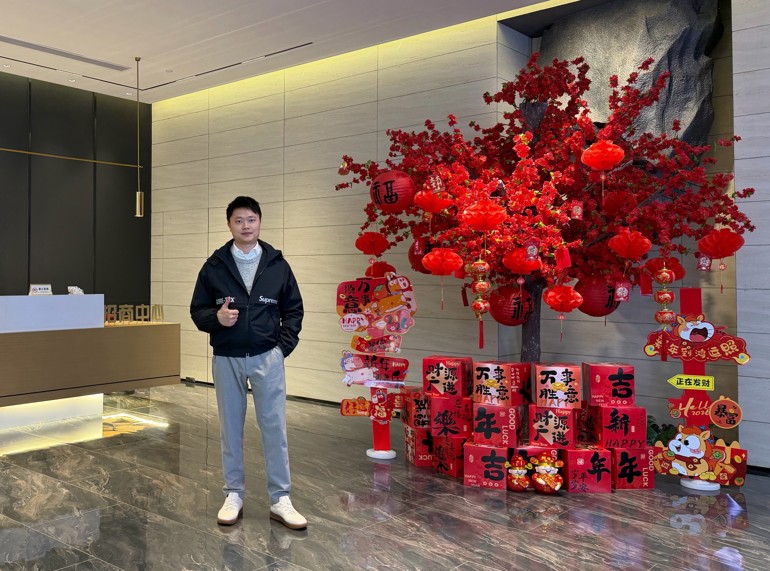
How does Lunar New Year shape leadership, decision-making, and company culture?
“Around the holiday, leadership feels more human and giving. I use this time to look back honestly, what worked, what didn’t, and which relationships need attention. I consciously reset energy for the year ahead. It reinforces a belief I hold strongly: People are not just part of a system or team, they are part of a shared journey and should be rewarded for their contributions.” — Sophie Su
“It unites the team as businesses create festive cultural activities with strong traditional vibes. The most important event, the New Year party, lets the whole team look back on the year’s journey together, strengthening company unity.” — Nichola Zhang, EO Beijing
“It shapes leadership on two levels: On the human level, it reinforces guanxi (relationships). Giving hongbao (red envelopes) is a leader’s gesture of care, humanizing the business relationship. On the strategic level, many leaders consult the Lunar Calendar, an ancient system combining the 12 zodiac animals with the five elements (metal, wood, water, fire, earth). Leaders assess the "elemental properties" to decide what is suitable to do and what should be avoided, aligning business rhythms with the flow of the year.” —Troy Su
What does this year’s zodiac symbol, the Fire Horse, represent culturally?
“The Fire Horse traditionally represents energy, courage, movement, and transformation. While most entrepreneurs don’t make decisions purely based on zodiac symbolism, it becomes a reminder to be decisive, move forward boldly, and embrace change rather than resist it. It is symbolic, but still psychologically influential.” — Kevin Zhao
“The Fire Horse is very auspicious, linked to lucky idioms: Wish you immediate success, May wealth come quickly, and Take the lead. These positive symbols give Chinese entrepreneurs a spiritual boost. Zodiac culture is deeply rooted in Chinese culture; it connects tradition and modernity, culture, and daily life.” — Nichola Zhang
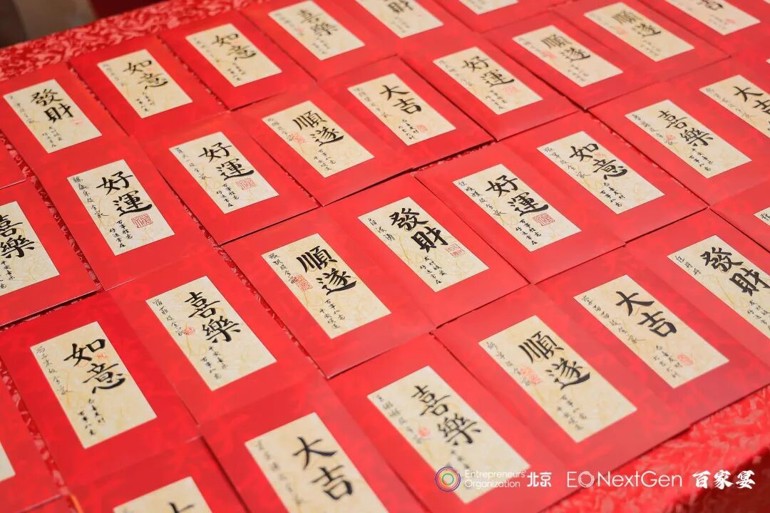
What might EO members around the world learn from how Lunar New Year emphasizes renewal and connection?
“The wisdom of the holiday is a great lesson for everyone across the globe. Valuing and acting on the need for inner clarity and external connection transcends cultural differences.” — Nichola Zhang
“The most profound lesson is the concept of remembering where we came from. In Chinese culture, we return home every year to reconnect with our roots. It is an educational moment for the younger generation—to show our children and grandchildren the foundation of their lineage. For EO members around the world, the lesson is that true sustainability comes from knowing your identity. Understanding where you are from gives you the grounding and strength to face the future.” — Troy Su
“Taking time to express gratitude, reconnect with people who matter and have helped you along the way is important and should be intentional. In a world that rewards constant speed, this kind of pause can be incredibly grounding.” — Sophie Su
“I think the biggest lesson is the value of intentional pauses. The holiday teaches that stopping is not the opposite of progress — it enables it. Renewal, reflection, and reconnection with people around you creates resilience. For entrepreneurs, building in moments to reset and strengthen relationships can be just as important as strategy and execution.” — Kevin Zhao
Consider Bold Action in the Year of the Fire Horse
“The Fire Horse is often associated with boldness, speed, independence, and strong momentum but also with intensity and unpredictability," says Sophie. "In Chinese culture, symbols help frame intention, even if not taken literally. I use it as a prompt for reflection, asking myself: Where do I need to be bolder this year? Where might I need to slow down?”
As we enter the Year of the Fire Horse, may EO members worldwide honor the pause, remember our roots, then step forward ready to Think Big, Be Bold.