
 Login
Login


AI as a Workforce: The Next Wave for Entrepreneurs?
August 18, 2026
Published in:
At a recent EO Rise event hosted by EO Los Angeles, entrepreneur and AI innovator Falon Fatemi challenged attendees to rethink entrepreneurship in an era when intelligence and digital tools are abundant, and founders must move from execution to orchestration.
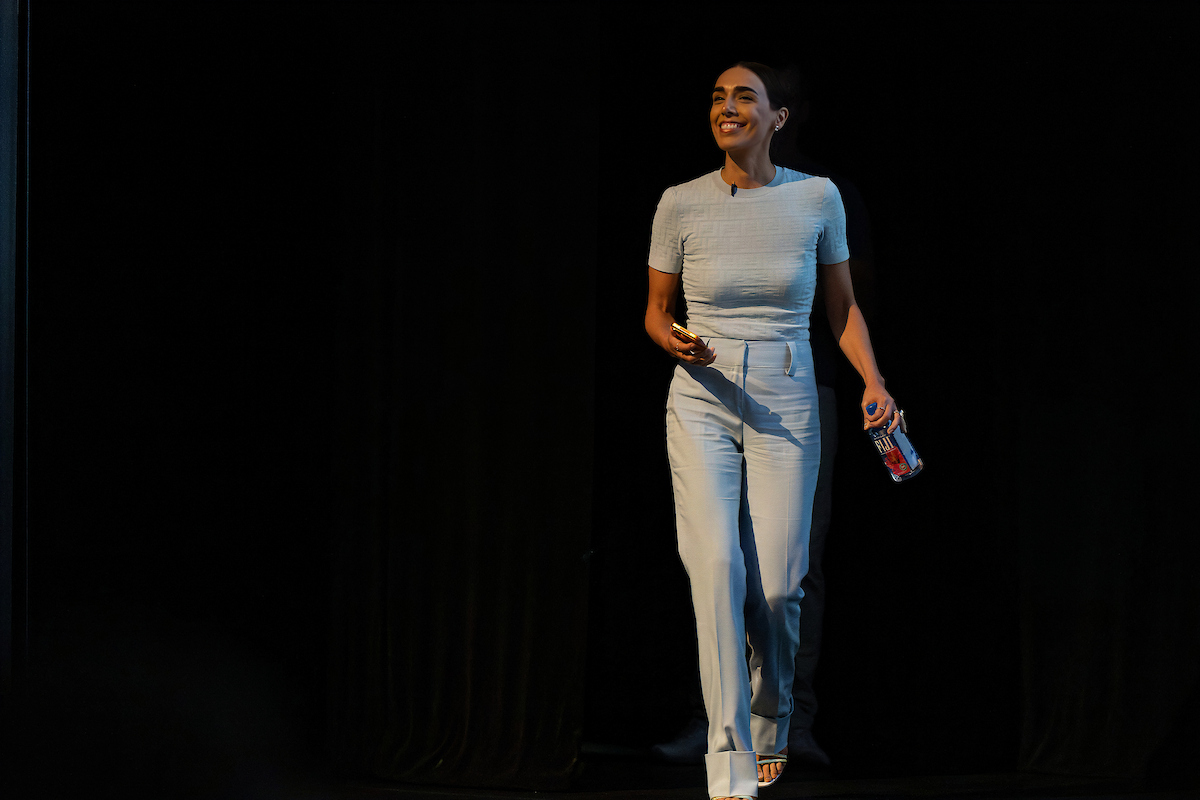
Falon Fatemi
Entrepreneur, investor, and AI innovator Falon Fatemi has spent her career at the cutting edge of technological change. She is the co-founder of Fireside alongside renowned entrepreneur and investor Mark Cuban, the founder of Node, a general partner at Digital Indies, and was Google’s youngest employee at only 19. She has been named to Fortune’s 40 Under 40 list of the most influential people in technology and Fast Company’s Most Creative People in Business list.
At an EO Rise event hosted by EO Los Angeles last month, she brought that experience and hard-earned insights to a room of entrepreneurs navigating a moment when AI is moving well beyond basic chatbots and productivity tools. The event gathered more than 400 EO members from 19 chapters and also featured a Q&A with Mark Cuban on entrepreneurship, leadership, innovation, and AI.
Falon’s keynote and demonstration focused on AI’s ability to reshape how the most efficient companies are designed and led. Her central theme? The entrepreneurs who benefit most from the technology will build synchronous AI workforces while taking on a new role themselves: designing the organization rather than doing or managing every task within it.
Here are four takeaways from Falon’s session for founders preparing to lead in the age of AI workforces:
1. AI is the new company architecture, not just a tool
For generations, companies were organized around the limits of human capacity: time, expertise, management bandwidth, and access to talent. AI changes that premise by making intelligence more abundant and deployable across functions.
“These intelligent systems — agents — they do not need to sleep. They do not need to eat. They do not need medical benefits. What is amazing is that they are abundant enough that they can be deployed continuously across many functions and at a marginal cost compared to a human,” she noted. “So that is the shift.”
“When a scarce resource stops being scarce, the systems we build around its scarcity have to change, and that is where we are right now,” she continued. “AI is not just another piece of software. It is really changing the architecture of the company itself.”
For entrepreneurs, this presents an opportunity to rethink how teams can be designed when intelligence is no longer constrained by human capacity alone.
2. The next wave? The AI workforce
Falon distinguished between three stages of AI adoption: chatbots that answer questions, agents that complete tasks, and AI workforces that operate as coordinated systems with memory, responsibilities, feedback loops, escalation paths, and accountability.
“The third wave is AI workforces, where it is not one agent trying to do everything, but a coordinated system of agents,” she said. “It is as close as you can get to a human employee and as close as you can get to a human team of employees.”
The difference matters. A single agent can complete a specific task, but an AI workforce can begin to operate more like a team, with defined roles and mechanisms for learning, escalation, and performance against stated objectives.
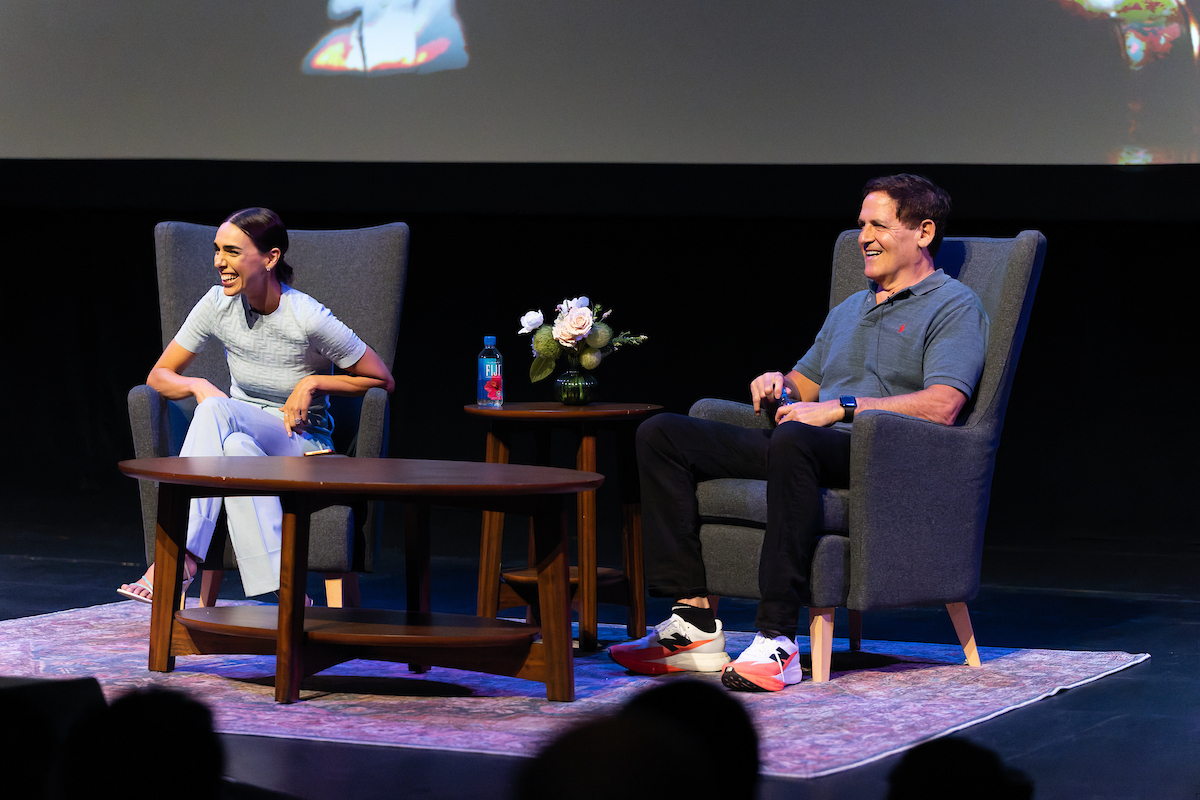 Falon held a Q&A with Mark Cuban the day after her AI speech at EO Rise.
3. The founder’s role is shifting from operator to orchestrator
In Falon’s view, AI changes the entrepreneur’s job from doing every task or supervising every step to defining goals, constraints, and outcomes for intelligent systems to execute against.
“In the old world, there were several layers between the entrepreneur and the business outcome,” she said. “The entrepreneur hired people; those people used software; and the people and software produced the business. In the new world, the people and software layer can begin to collapse into an AI workforce. We, the entrepreneurs, define the objectives, outcomes, constraints, resources, and standards by which execution should happen. Humans do not disappear from the system, but our role fundamentally changes.”
That shift requires founders to become system designers. Rather than asking AI for isolated outputs, they must learn to build workflows that coordinate tasks and deliver compounding benefits over time.
4. Train AI like an employee, not a search box
Falon urged entrepreneurs to treat AI systems less like software and more like employees in training. That means providing context, setting clear objectives, asking for plans, reviewing results, and giving feedback before expecting strong execution.
“If you start to look at it as: ‘I am training an employee that is going to get better every single day,’ you are going to operate differently and they are going to deliver,” she said. “But you have to have the patience to do that.”
When a system can learn and adapt, each interaction becomes part of its development. Founders who invest the time to train AI thoughtfully may build systems that become more useful with every cycle.
Interested in having access to unique events like these? Learn more about becoming an EO member.
 More EO Insights

Mark Cuban on Trust, AI, and Entrepreneurship: 5 Lessons for Founders
At a recent EO Rise event in Beverly Hills, the famed entrepreneur and investor shared candid insights on leadership, innovation, AI adoption, and business growth, offering fellow entrepreneurs a practical framework for building companies that endure amid ever-changing technologies and markets.

Attendee Takeaways from EO’s Stanford AI Integration Lab
EO members gathered for an immersive executive education program at Stanford Graduate School of Business to explore how artificial intelligence is reshaping strategy, operations, and leadership. Through hands-on learning and peer collaboration, participants left with practical roadmaps to redesign their companies for the AI age.

5 Ethical AI Pillars To Ensure Responsible Use in Your Organization
How does your company ensure that its AI-driven decisions are both human-centered and ethically responsible? An AI expert shares five ethical pillars for responsible AI with tips on how to implement them in your organization.