
 Login


The Business of Helping Others: How a Founder Found Renewed Purpose Through Social Entrepreneurship
November 5, 2026
Published in:

By any external measure, Philip Wilson was a successful entrepreneur. After earning his Wharton MBA at 25, he founded a battery distribution company in California and later sold it. Next, he co-founded a bank and sold that. Then, to be near family, he moved back to his home country, Guatemala, with his wife and children where he started a web services company, ran an organic coffee farm, and took on real estate projects.
But when he turned 40, he began to question his life.
At a family Christmas gathering, he told his mother he felt “like a leaf in the wind.”
She handed him Viktor Frankl’s Man’s Search for Meaning. Frankl, a concentration camp survivor and influential psychiatrist, believed that for life to be bearable, a person must find meaning.
This struck a chord with Philip. He felt empty and unfulfilled.
He did not have to look far to find meaning. In rural Guatemala, families lacked clean drinking water, and children were dying from intestinal infections. To solve the problem, Philip’s mother had created a foundation that distributed natural filters made from clay, sawdust, and colloidal silver, using technology developed in 1981 by Guatemalan biochemist Dr. José Fernando Mazariegos. But due to limited resources, they reached only about 2,000 families, while roughly 1 million others still went without. As long as the work depended on donations, it could never reach enough people.
So, ever the entrepreneur, Philip set out to find another way.
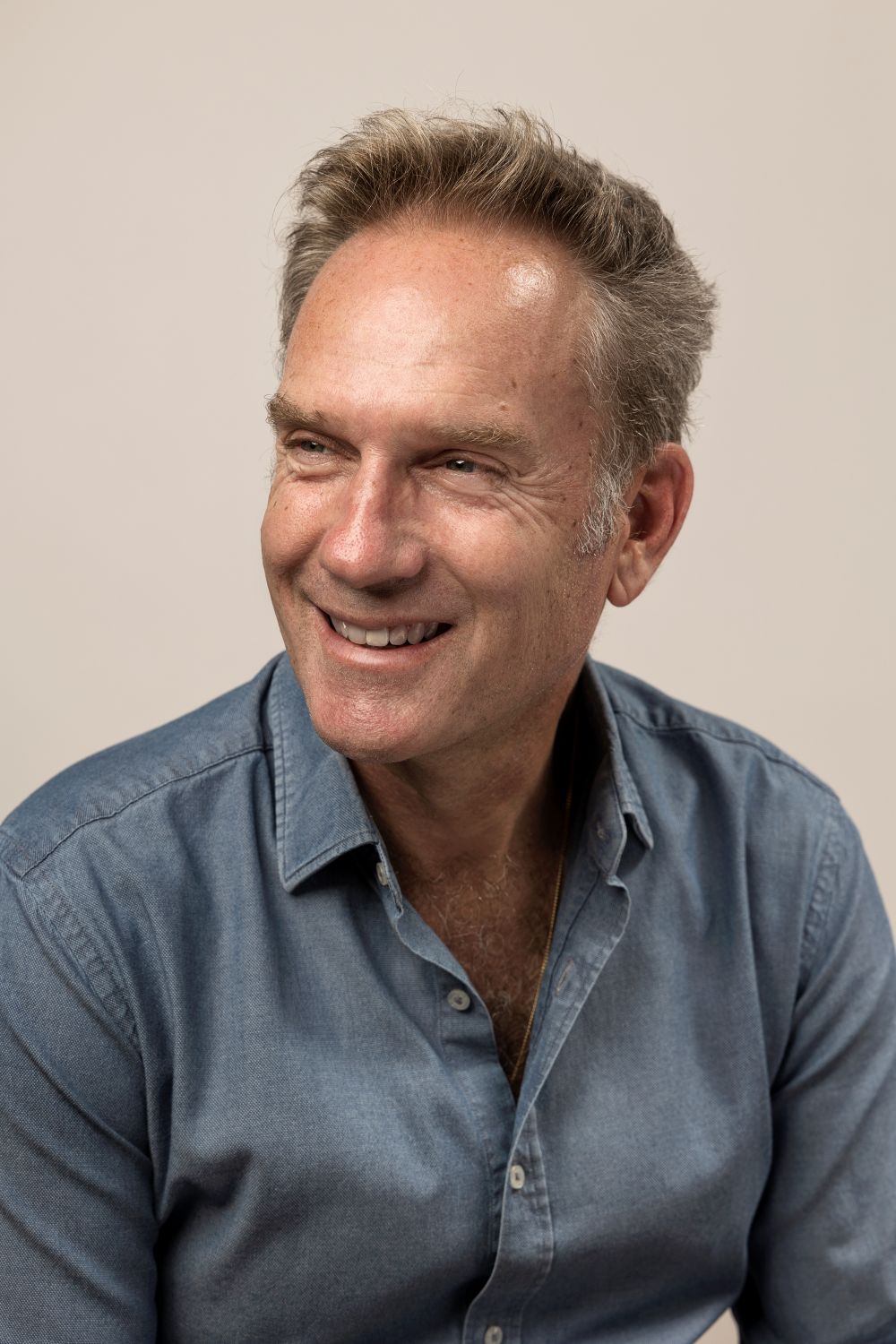
Philip Wilson (EO Guatemala)
Change the Method, Not the Mission
His first idea was to run the foundation more like a business, selling filters instead of giving them away. It did not work. The thinking was sound, but grafting a for-profit approach onto an organization built on a non-profit mindset presented too many obstacles.
So, he started fresh. He founded Ecofiltro and hired young people who believed in social entrepreneurship, the idea that working in the private sector toward a noble purpose was the most efficient way to get things done at scale.
Ecofiltro’s strategy grew out of what Philip saw in rural villages and what he understood about human nature. Families boiled their water over wood fires, spending about US$15 a month on firewood. Many also owned phones, TVs, and other consumer items. Philip realized they could afford a filter if they understood it was a good investment.

“If you focus on helping others and having a noble project, joy ensues.”
- Philip Wilson (EO Guatemala)
To make the strategy work, Ecofiltro started with urban families, selling through Walmart and other retailers as a replacement for bottled water. That revenue let Ecofiltro sell to rural families at a price so low the filter paid for itself in three months or less. “If you give me US$30, I will return to you US$350,” was Philip’s pitch.
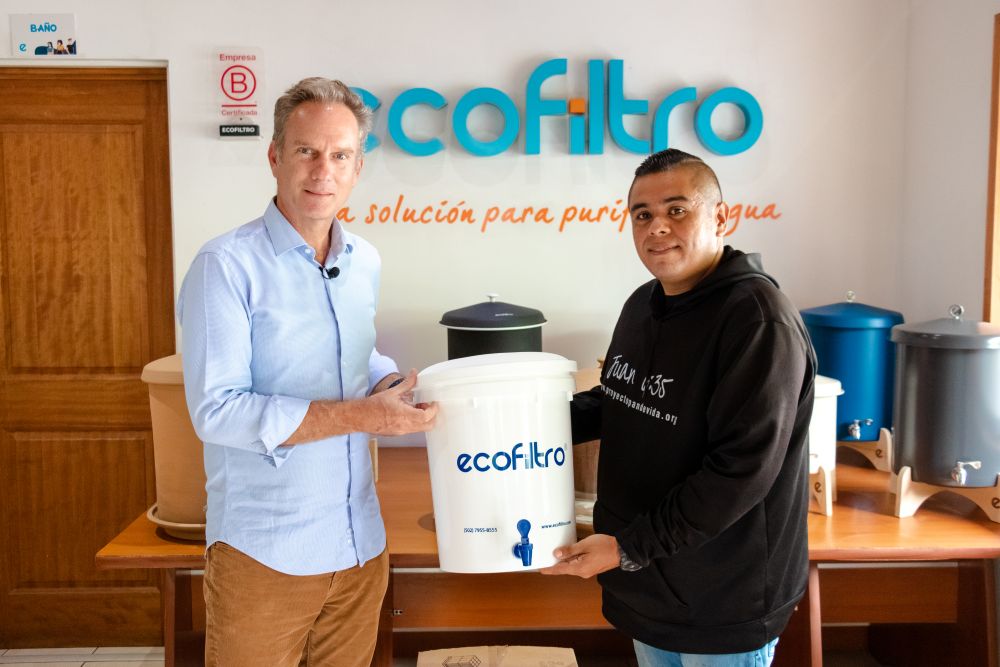
The distribution model was also strategic. To build trust in rural communities that often had little faith in outsiders, Ecofiltro donates filters to rural schools through a local distributor, then shows parents how to bring the same clean water home. More than 5,000 schools and about 1.5 million children now have filters.
To Philip, the key was always showing respect, noting that just because people did not have much money did not mean they lacked aspirations or did not want agency to do what was best for their families. Ecofiltro learned just how much that mattered. For the first several years, Ecofiltro sold rural families the same simple white bucket the foundation had used. When it introduced a modern version with a colorful lid and base, demand tripled, even at a higher price. “Like you and me, they want to show off something in their home,” Philip says, “and they want it to be a good deal.”

The Business of Helping Others
Philip believes that people often confuse social entrepreneurship with charity. He notes that the latter “is often not sustainable, which really does not help anyone.”
He runs his factory “as if it is BMW or Ferrari,” with real-time data, Six Sigma practices, and ISO certification. Ecofiltro takes no grants, government aid, or donations, and it earned more than US$10 million in revenue last year and expects about US$13 million this year. Ecofiltro now operates in 25 countries, including Central and South America, Europe, and the U.S. They recently established their first presence in Tanzania, Africa.
The challenge now is meeting demand. Philip is redesigning the factory’s production process to speed up filter production, and he knows he has about 18 months to get it right before demand outstrips supply.
Ecofiltro is a certified B Corp, and Philip applies that commitment inside the company, too. About five years ago, he eliminated its hierarchy. Ecofiltro’s roughly 200 employees in Guatemala now work in teams of about 20, and every month the company shares 25 percent of its profits among all employees. The rest goes back into the business. “It is the closest you can bring your collaborators to being entrepreneurs without them having to take financial risk,” he says.
“This Is What I Was Meant to Be”
Philip’s wife likes to say that when he started Ecofiltro, he was an 80-year-old 40-year-old. He used to fill his days with long vacations and CNBC, tracking his investments. Once he found his purpose, he says, “I turned into a teenager,” curious and energized.
That feeling has not faded. “I have never had a day when I do not get up early,” he says. He has reread Man’s Search for Meaning three times, and he is convinced Frankl described something universal. “Our nature is to help others,” he says. “Social entrepreneurship is helping on steroids if you do it right.”
His only regret is the timing. “This is what I was meant to be,” he says. “I wish I was doing this in my 20s.”
His helping spirit shapes how he thinks about competition. Ecofiltro holds no patent. The biochemist who developed the filter donated the technology to humanity, and Philip honors that wish. Ecofiltro protects its brand, but any entrepreneur can come to the factory and learn to make the filters. “At the end of the day, I want clean water in every household,” he says. “I wish there were hundreds of people doing this. It is such a silly problem to still have. Kids die from unclean water when there are so many ways to fix it.”
He brings that same thinking to his hometown, Antigua. Coffee and tourism were not lifting people out of poverty, so next to the Ecofiltro factory he built El Cubo, a startup incubator that now houses 45 companies. Its purpose, he says, is “more and better jobs,” and it has created hundreds of them.
An Open Invitation to EO Members
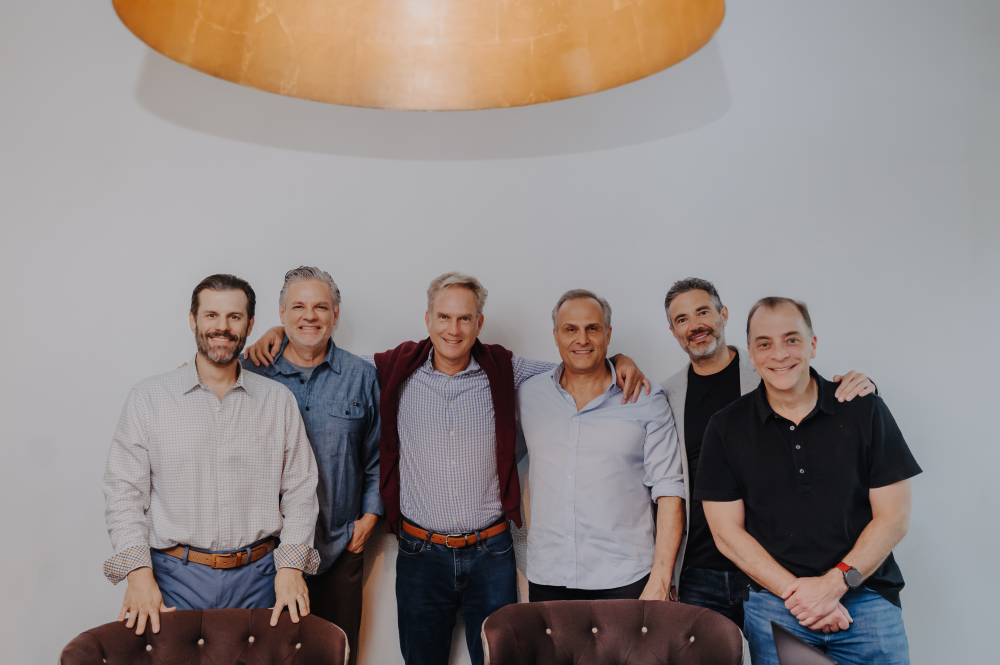
Philip and members of his EO Forum
Philip joined EO in 2000, and he believes its members are exactly the people the world needs. When EOers tour his factory, he tells them they have the skills to “solve the biggest world problems, because we know how to scale things.”
He thinks entrepreneurs in their 40s and 50s are especially ready to hear that message, but he is offering to mentor any EO member who wants to find more meaning in their life and business. He promises to share “the nitty-gritty, all the failure at the beginning, the things I tried, what works, what does not.”
“EO is a filter for me,” he explains. “I will not be wasting my time, because I know EOers have the skills, if their hearts are in the right place.”
He advises starting by spending time alone and asking what you want your legacy to be. “What is something you would like to solve before you die, at scale? Start there.” He adds, “Listen to your heart, not just your mind.”
He promises the reward is worth it. Everyone is searching for happiness, he explains, but you cannot chase it. “If you focus on helping others and having a noble project, joy ensues.”
Philip Wilson (EO Guatemala) can be reached at pwilson@ecofiltro.com to discuss social entrepreneurship and the power of market-based solutions to address poverty while preserving dignity and choice. Interested in becoming an EO member like Philip? Learn more here.
 More EO Member Journeys

Glass Half Full: The Young Entrepreneur Who Refused to Throw Away a Good Idea
What began as Franziska Trautmann’s brainchild over a bottle of wine has grown into a booming recycling business that is helping restore Louisiana’s coast.

How Believing in Miracles, and EO, Kept a Cookie Company From Crumbling
Shahira Marei ventured to EO’s Entrepreneurial Masters Program (EMP) ready to give her company away. Instead, she came home, rebuilt it, and is on track to surpass US$10 million in revenue.

From Housekeeper to CEO to Champion of Change
Sherry Deutschmann (EO Nashville) grew her company to US$40M by sharing profits and treating every employee as essential. Now she is using that philosophy to help women build million-dollar companies.